I'd guess the guy in the middle.
Bloomberg: Oil Rises Above $134 on U.S. Supply Drop, Bank Price Forecasts.
Quote:
``What we have here is a situation where essentially higher prices aren't generating any more supply,'' Paul Sankey, an analyst at Deutsche Bank Securities in New York said in an interview with Bloomberg radio. ``What we have to do is keep pricing the commodity higher until demand starts falling,'' which ``is around $150 a barrel.''
....
The price of oil should be ``somewhere between $35 and $65 a barrel,'' John Hofmeister, president of Shell Oil Co., the Houston-based subsidiary of Royal Dutch Shell, said at the hearing yesterday. Other executives said prices should be as much as $90 a barrel.
Financial Times: Shortage fears push oil futures near $140.
Quote:
Adam Sieminski, chief energy economist at Deutsche Bank, said: “The price is going to go up until governments that subsidise oil consumption in Asia and the Middle East can no longer afford it.”
Wednesday, May 21, 2008
Separating the men from the boys.
CNBC: $12 Gas and Rationing? Possible, Says Expert.
Quotes:
"The prices that we're paying at the pump today are, I think, going to be 'the good old days,' because others who watch this very closely forecast that we're going to be hitting $12 and $15 a gallon, and then, after that, when world oil production goes into decline, we're going to talk about rationing," Robert Hirsch, Management Information Services Senior Energy Advisor, said on CNBC's "Squawk Box." "In other words, not only are we going to be paying high prices and have considerable economic problems, but in addition to that, we're not going to be able to get the fuel when we want it."
Hirsch argued that the maximum in world oil production has already been hit.
"The idea is that [world oil production] would hit a sharp peak and then drop off, and what's happened is, we've hit a plateau in world oil production, and that plateau has been ongoing since about the middle of 2004," he said.
Those who argue that new technology and new types of energy will solve the problem aren't on solid ground, Hirsch suggested.
"There's no single thing that's going to solve this problem, because it's as massive as one can possibly imagine," he said.
Wall Street Journal: U.S. Military Launches Alternative-Fuel Push.
Quotes:
Some Pentagon officers have embraced planning around the "peak oil" theory, which holds that the world's oil production is about to plateau due to shrinking resources and limited investment in many of the most oil-rich regions of the Middle East. Earlier this year, they brought Houston investment banker Matthew Simmons to the Pentagon for a presentation on peak oil; he warned that under the theory, "energy security becomes an oxymoron."
MarketWatch: Crude futures top $130 a barrel.
Quotes:
The Bank of England on Wednesday became the latest to signal their fears, with the central bank saying in minutes of its last meeting that tight supplies rather than speculation is driving prices higher.
"According to the Bank's market contacts, speculative purchases did not seem to be the prime cause of the recent increases in the oil price," the central bank said, referring to the rise in oil prices during the month of April.
"More fundamental demand and supply factors had probably been at the root of its steep rise during recent months, and there remained considerable uncertainty about the oil price outlook," it said.
New York Times: The Cassandra of Oil Prices.
Quotes:
Mr. Murti falls into the camp of oil analysts who believe that supply is likely to remain tight because of geopolitical factors. These analysts predict higher prices because production is declining in non-OPEC countries like Britain, Norway and Mexico.
The analysts who predict lower prices say there are supplies of oil that the bullish analysts are missing. “This year will be a year in which supply will be put into the market by stealth by OPEC and by countries we call black-hole countries,” said Edward L. Morse, chief energy economist at Lehman Brothers. China is one example, he said.
But while oil and gas prices have been rising for a while now, Americans have only just begun to reduce gasoline consumption, so their efforts to conserve have not dragged down oil prices.
“The fact that the U.S. gasoline demand can be down and that the U.S. gasoline consumer is no longer driving world oil prices is a monumental event,” Mr. Murti says. He spends most of his time talking to money managers and analysts, many of whom keep asking him if oil prices will stay high if speculators abandon the market, and says he applauds investors for driving up oil prices, since that will spur investment in alternative sources of energy.
High prices, he says, “send a message to consumers that you should try your best to buy fuel-efficient cars or otherwise conserve on energy.” Washington should create tax incentives to encourage people to buy hybrid cars and develop more nuclear energy, he said.
Of course, if lawmakers heed his advice, oil analysts like him might one day be a thing of the past. That’s fine with Mr. Murti.
“The greatest thing in the world would be if in 15 years we no longer needed oil analysts,” he says.
MarketWatch: Oil of oy vey.
Quotes:
As a trader, I'm not as concerned with the ultimate destination as much as the path that we take to get there. I've generally avoided the energy space this year and focused my attention on the financials and select technology, taking what the market gave me while preserving capital and keeping my powder dry.
Toward the end of last week, I began building short-side exposure in the energy realm. Catching cusps is a dangerous proposition, whether it's grasping at a falling knife or getting in the way of parabolic frolic. It's a generally accepted trading axiom that money is made between the twenties and we should avoid the red zone whenever possible.
With that said, I share these thoughts with two caveats. First, I'm typically early, which is as damaging as being wrong if you're not there to cash in your chips. Second, while a seismic structural shift could occur at any time, my motivation is to simply capture a trade.
The bull case for energy is loud and proud as a function of the price action. There are supply constraints, emerging market needs, incremental demand from China (following the earthquake), pressure on the U.S. dollar (the price of socialization), unreliable alternative sources, psychology (furthered by a recent Goldman Sachs report) and perhaps the biggest risk, in my view, the potential for geopolitical tension in Iran.
On the other side of that ride, we have political agendas into the election, incessant (unconfirmed) chatter that margins on crude futures will be raised, faltering demand by an already strapped U.S. consumer and the unfortunate truth that all roads will ultimately lead to debt destruction through deflation.
....
Again, the single biggest caveat to the short energy thesis, in my view, is an uptick in Middle East acrimony.
As the market is a prescient beast, that unfortunate thought would certainly explain the incessant bid we've seen to date.
[I think he's wrong there. It's Chinese demand and the idea that we'll have another cold winter that I think is driving this relentless move upwards. But I've been thinking about reducing positions too, though not actual shorting. So much focus on oil smells of some kind of top.]
CNBC: Fast Money Final Trade.
Quotes:
"Short Hess."
CNBC: OPEC Oil Supply Rising in May: Petrologistics.
Quotes:
OPEC oil supply in May is expected to rise by 700,000 barrels per day (bpd), led by higher output from members including Nigeria and Saudi Arabia, an industry consultant said on Wednesday.
The increase comes during a month in which oil has soared to record highs and indicates OPEC is again pumping more than its supply limit after a strike in Nigeria lowered output and Saudi Arabia opted to pump more.
All 13 OPEC members are expected to pump 32.4 million bpd this month compared with a revised 31.7 million bpd in April, Conrad Gerber of tanker tracker Petrologistics, told Reuters.
"There is a strong rebound in supply," Gerber said. "Iraq is having a good export performance and Nigeria is coming back up."
Quotes:
"The prices that we're paying at the pump today are, I think, going to be 'the good old days,' because others who watch this very closely forecast that we're going to be hitting $12 and $15 a gallon, and then, after that, when world oil production goes into decline, we're going to talk about rationing," Robert Hirsch, Management Information Services Senior Energy Advisor, said on CNBC's "Squawk Box." "In other words, not only are we going to be paying high prices and have considerable economic problems, but in addition to that, we're not going to be able to get the fuel when we want it."
Hirsch argued that the maximum in world oil production has already been hit.
"The idea is that [world oil production] would hit a sharp peak and then drop off, and what's happened is, we've hit a plateau in world oil production, and that plateau has been ongoing since about the middle of 2004," he said.
Those who argue that new technology and new types of energy will solve the problem aren't on solid ground, Hirsch suggested.
"There's no single thing that's going to solve this problem, because it's as massive as one can possibly imagine," he said.
Wall Street Journal: U.S. Military Launches Alternative-Fuel Push.
Quotes:
Some Pentagon officers have embraced planning around the "peak oil" theory, which holds that the world's oil production is about to plateau due to shrinking resources and limited investment in many of the most oil-rich regions of the Middle East. Earlier this year, they brought Houston investment banker Matthew Simmons to the Pentagon for a presentation on peak oil; he warned that under the theory, "energy security becomes an oxymoron."
MarketWatch: Crude futures top $130 a barrel.
Quotes:
The Bank of England on Wednesday became the latest to signal their fears, with the central bank saying in minutes of its last meeting that tight supplies rather than speculation is driving prices higher.
"According to the Bank's market contacts, speculative purchases did not seem to be the prime cause of the recent increases in the oil price," the central bank said, referring to the rise in oil prices during the month of April.
"More fundamental demand and supply factors had probably been at the root of its steep rise during recent months, and there remained considerable uncertainty about the oil price outlook," it said.
New York Times: The Cassandra of Oil Prices.
Quotes:
Mr. Murti falls into the camp of oil analysts who believe that supply is likely to remain tight because of geopolitical factors. These analysts predict higher prices because production is declining in non-OPEC countries like Britain, Norway and Mexico.
The analysts who predict lower prices say there are supplies of oil that the bullish analysts are missing. “This year will be a year in which supply will be put into the market by stealth by OPEC and by countries we call black-hole countries,” said Edward L. Morse, chief energy economist at Lehman Brothers. China is one example, he said.
But while oil and gas prices have been rising for a while now, Americans have only just begun to reduce gasoline consumption, so their efforts to conserve have not dragged down oil prices.
“The fact that the U.S. gasoline demand can be down and that the U.S. gasoline consumer is no longer driving world oil prices is a monumental event,” Mr. Murti says. He spends most of his time talking to money managers and analysts, many of whom keep asking him if oil prices will stay high if speculators abandon the market, and says he applauds investors for driving up oil prices, since that will spur investment in alternative sources of energy.
High prices, he says, “send a message to consumers that you should try your best to buy fuel-efficient cars or otherwise conserve on energy.” Washington should create tax incentives to encourage people to buy hybrid cars and develop more nuclear energy, he said.
Of course, if lawmakers heed his advice, oil analysts like him might one day be a thing of the past. That’s fine with Mr. Murti.
“The greatest thing in the world would be if in 15 years we no longer needed oil analysts,” he says.
MarketWatch: Oil of oy vey.
Quotes:
As a trader, I'm not as concerned with the ultimate destination as much as the path that we take to get there. I've generally avoided the energy space this year and focused my attention on the financials and select technology, taking what the market gave me while preserving capital and keeping my powder dry.
Toward the end of last week, I began building short-side exposure in the energy realm. Catching cusps is a dangerous proposition, whether it's grasping at a falling knife or getting in the way of parabolic frolic. It's a generally accepted trading axiom that money is made between the twenties and we should avoid the red zone whenever possible.
With that said, I share these thoughts with two caveats. First, I'm typically early, which is as damaging as being wrong if you're not there to cash in your chips. Second, while a seismic structural shift could occur at any time, my motivation is to simply capture a trade.
The bull case for energy is loud and proud as a function of the price action. There are supply constraints, emerging market needs, incremental demand from China (following the earthquake), pressure on the U.S. dollar (the price of socialization), unreliable alternative sources, psychology (furthered by a recent Goldman Sachs report) and perhaps the biggest risk, in my view, the potential for geopolitical tension in Iran.
On the other side of that ride, we have political agendas into the election, incessant (unconfirmed) chatter that margins on crude futures will be raised, faltering demand by an already strapped U.S. consumer and the unfortunate truth that all roads will ultimately lead to debt destruction through deflation.
....
Again, the single biggest caveat to the short energy thesis, in my view, is an uptick in Middle East acrimony.
As the market is a prescient beast, that unfortunate thought would certainly explain the incessant bid we've seen to date.
[I think he's wrong there. It's Chinese demand and the idea that we'll have another cold winter that I think is driving this relentless move upwards. But I've been thinking about reducing positions too, though not actual shorting. So much focus on oil smells of some kind of top.]
CNBC: Fast Money Final Trade.
Quotes:
"Short Hess."
CNBC: OPEC Oil Supply Rising in May: Petrologistics.
Quotes:
OPEC oil supply in May is expected to rise by 700,000 barrels per day (bpd), led by higher output from members including Nigeria and Saudi Arabia, an industry consultant said on Wednesday.
The increase comes during a month in which oil has soared to record highs and indicates OPEC is again pumping more than its supply limit after a strike in Nigeria lowered output and Saudi Arabia opted to pump more.
All 13 OPEC members are expected to pump 32.4 million bpd this month compared with a revised 31.7 million bpd in April, Conrad Gerber of tanker tracker Petrologistics, told Reuters.
"There is a strong rebound in supply," Gerber said. "Iraq is having a good export performance and Nigeria is coming back up."


Tuesday, May 20, 2008
Pickens Wants to Move It, Move It to Natural Gas.
Sorry, I just couldn't resist.
CNBC: Pickens: Oil Going to $150, So Move to Gas.
Quotes:
"Eighty-five million barrels of oil a day is all the world can produce, and the demand is 87 million," he said. "It's just that simple. It doesn't have anything to do with the value of the dollar."
He expects the price of a barrel of oil to reach $150 this year, and he insists speculation has nothing to do with it.
....
Pickens says natural gas is the only American resource that can reduce oil imports. He claims the effective use of natural gas could reduce oil imports by 40 percent. He dismissed ethanol as an alternative. He added that what reduced demand there has been in the United States has immediately been picked up by China.
"The only way I see that oil doesn't continue to rise [is] if we had a global recession." he said. "That will happen at some point, but I don't see the Chinese stumbling until after the Olympics."
CNBC: Pickens: Oil Going to $150, So Move to Gas.
Quotes:
"Eighty-five million barrels of oil a day is all the world can produce, and the demand is 87 million," he said. "It's just that simple. It doesn't have anything to do with the value of the dollar."
He expects the price of a barrel of oil to reach $150 this year, and he insists speculation has nothing to do with it.
....
Pickens says natural gas is the only American resource that can reduce oil imports. He claims the effective use of natural gas could reduce oil imports by 40 percent. He dismissed ethanol as an alternative. He added that what reduced demand there has been in the United States has immediately been picked up by China.
"The only way I see that oil doesn't continue to rise [is] if we had a global recession." he said. "That will happen at some point, but I don't see the Chinese stumbling until after the Olympics."
Give me liberty or give me windfall profit taxes.
I sort of admired Barack Obama when I first heard about him, but his idea about windfall profit taxes on oil companies is about the quickest legislative way to get to $200 oil that I can think of. If you want less investment in oil and natural gas production, vote for higher taxes on oil companies, and stand back and watch prices skyrocket. As mentioned below, things are already tight enough in the oil and gas business.
My guess is that John McCain will be the next president, but if Obama gets elected, I will be very interested to see what he does with this idea and what the consequences will be.
Reuters: Schlumberger sees threat to oil, gas output growth.
Quotes:
Less than 25 percent of worldwide reserves are open to private investment, he said, because many states are turning over their fields to government-controlled oil companies.
"This does not mean that (production) gains will not occur, but it does mean that they will take longer than if access had been more open," Gould said.
Schlumberger, the world's largest oilfield services company, and its peers have posted sharp revenue and earnings growth in recent years as energy companies increased spending, and Gould has predicted that trend will remain in place into the next decade.
Oil prices in the United States have jumped to record levels near $128 a barrel in recent days, and natural gas has surged to $11 per million British thermal unit.
For the energy producers, rising costs for raw materials such as steel have also help contributed to a 120 percent increase in exploration and production spending between 2004 and 2007, while the number of new wells drilled has risen by only 52 percent, he said.
High energy prices have also prompted governments around the globe to hike taxes and change investment terms to gain a greater share of producers' profits.
But added to the rising materials cost and the riskier nature of many new fields, "there is a real danger that this will cause underinvestment and simply exacerbate the problems," he said.
And what of McCain's gasoline tax holiday idea?
Newsweek: Should You Pay $6 Per Gallon?
Quotes:
Kloza goes a bit further, calling a gas-tax holiday "caca." "It represents pandering. You're not leveling with the American public," says Kloza. "All this talk of energy independence means nothing if you don't have energy discipline. When it comes to our gasoline consumption, we're the morbidly obese of the world. And like the person who weighs 350 pounds, we need to exercise more and consume less." To do that, though, first you have to look in the mirror and admit there's a problem—and it's not the price of gas.
My guess is that John McCain will be the next president, but if Obama gets elected, I will be very interested to see what he does with this idea and what the consequences will be.
Reuters: Schlumberger sees threat to oil, gas output growth.
Quotes:
Less than 25 percent of worldwide reserves are open to private investment, he said, because many states are turning over their fields to government-controlled oil companies.
"This does not mean that (production) gains will not occur, but it does mean that they will take longer than if access had been more open," Gould said.
Schlumberger, the world's largest oilfield services company, and its peers have posted sharp revenue and earnings growth in recent years as energy companies increased spending, and Gould has predicted that trend will remain in place into the next decade.
Oil prices in the United States have jumped to record levels near $128 a barrel in recent days, and natural gas has surged to $11 per million British thermal unit.
For the energy producers, rising costs for raw materials such as steel have also help contributed to a 120 percent increase in exploration and production spending between 2004 and 2007, while the number of new wells drilled has risen by only 52 percent, he said.
High energy prices have also prompted governments around the globe to hike taxes and change investment terms to gain a greater share of producers' profits.
But added to the rising materials cost and the riskier nature of many new fields, "there is a real danger that this will cause underinvestment and simply exacerbate the problems," he said.
And what of McCain's gasoline tax holiday idea?
Newsweek: Should You Pay $6 Per Gallon?
Quotes:
Kloza goes a bit further, calling a gas-tax holiday "caca." "It represents pandering. You're not leveling with the American public," says Kloza. "All this talk of energy independence means nothing if you don't have energy discipline. When it comes to our gasoline consumption, we're the morbidly obese of the world. And like the person who weighs 350 pounds, we need to exercise more and consume less." To do that, though, first you have to look in the mirror and admit there's a problem—and it's not the price of gas.
Friday, May 16, 2008
Goldman Sachs: Fundamentals.
MarketWatch: Oil and gas producers lead London higher.
Quotes:
Goldman Sachs on Friday raised its forecast for the average price of West Texas Intermediate oil in the second half of 2008 by 32% to $141 a barrel from $107 a barrel.
"We believe that the market is not defying fundamentals but rather experiencing a structural re-pricing much like it did in 2004, searching for a new equilibrium against an uncertain long-term supply environment," the broker said.
Bloomberg: Goldman Raises Second-Half WTI Oil Forecast to $141.
Quotes:
``Supply constraints and a lack of scaleable substitutes are set to continue driving the long end of the oil curve higher,'' Goldman analysts including Peter Oppenheimer and Jeffrey Currie in London wrote in a report dated today.
....
The trend in the growth of oil supply has fallen to 1 percent per annum, compared with global economic growth of about 3.8 percent, today's Goldman report said. ``Given this imbalance, long-term oil prices will need to rise.''
....
The near-term oil market is being driven by ``long-dated'' prices, or the price of oil for delivery 5 years forward, Goldman said. While an increase in U.S. stockpiles and declining demand growth due to the global economic slowdown is creating ``near-term fundamental weakness,'' this is not causing lower prices, according to the bank.
``We do not expect these softer fundamentals to translate into spot price weakness given the strength in long-term prices,'' according to the report. ``We expect the bullish structural market to dominate the bearish cyclical weakness.''
Supply Constraints
Goldman said it was unlikely prices would eventually rise enough to justify large scale investment in alternative sources of fuel, thereby offsetting the discrepancy between supply and demand, because of resource protectionism which constrains supply growth.
Instead, an increase in long-term oil prices is required to suppress demand growth and bring it in line with supply growth, Goldman said. It forecasts the long-date oil price to rise 14 percent to $148 a barrel by early next year.
``Long-term oil prices will need to continue to rise to bring trend oil demand growth in line with trend supply growth,'' the bank said. ``Eventually a price will be reached which incentivizes significant conservation, new technologies and political solutions which will eventually cap the price rises.''
Quotes:
Goldman Sachs on Friday raised its forecast for the average price of West Texas Intermediate oil in the second half of 2008 by 32% to $141 a barrel from $107 a barrel.
"We believe that the market is not defying fundamentals but rather experiencing a structural re-pricing much like it did in 2004, searching for a new equilibrium against an uncertain long-term supply environment," the broker said.
Bloomberg: Goldman Raises Second-Half WTI Oil Forecast to $141.
Quotes:
``Supply constraints and a lack of scaleable substitutes are set to continue driving the long end of the oil curve higher,'' Goldman analysts including Peter Oppenheimer and Jeffrey Currie in London wrote in a report dated today.
....
The trend in the growth of oil supply has fallen to 1 percent per annum, compared with global economic growth of about 3.8 percent, today's Goldman report said. ``Given this imbalance, long-term oil prices will need to rise.''
....
The near-term oil market is being driven by ``long-dated'' prices, or the price of oil for delivery 5 years forward, Goldman said. While an increase in U.S. stockpiles and declining demand growth due to the global economic slowdown is creating ``near-term fundamental weakness,'' this is not causing lower prices, according to the bank.
``We do not expect these softer fundamentals to translate into spot price weakness given the strength in long-term prices,'' according to the report. ``We expect the bullish structural market to dominate the bearish cyclical weakness.''
Supply Constraints
Goldman said it was unlikely prices would eventually rise enough to justify large scale investment in alternative sources of fuel, thereby offsetting the discrepancy between supply and demand, because of resource protectionism which constrains supply growth.
Instead, an increase in long-term oil prices is required to suppress demand growth and bring it in line with supply growth, Goldman said. It forecasts the long-date oil price to rise 14 percent to $148 a barrel by early next year.
``Long-term oil prices will need to continue to rise to bring trend oil demand growth in line with trend supply growth,'' the bank said. ``Eventually a price will be reached which incentivizes significant conservation, new technologies and political solutions which will eventually cap the price rises.''
Thursday, May 15, 2008
Oil price: Speculators or fundamentals?
[Fundamentals = supply & demand.]
I'm with Jerry Castellini. Oil is at ~ $125 mainly because of the fundamentals. If it were primarily speculation driven, there would be a larger inventory build up, which we are not seeing.
CNBC: Market Mavens.
I'm with Jerry Castellini. Oil is at ~ $125 mainly because of the fundamentals. If it were primarily speculation driven, there would be a larger inventory build up, which we are not seeing.
CNBC: Market Mavens.
Saturday, May 10, 2008
Friday, May 09, 2008
Bizarro Headline of the Day.
Amidst all of the noise, it's easy to forget that the US continues to be one of the world's largest exporters. The strong dollar policy is paying off, and this may be the reason we're not in a full blown recession.
The Wall Street Journal: Container Shortage Frustrates U.S. Exporters.
Quotes:
Surging U.S. exports on a range of goods including corn, soybeans and frozen pork are hitting a bottleneck in the nation's overloaded ports, threatening to crimp profits for U.S. farmers and agricultural processors at a time when it is easier than ever for them to sell their goods abroad.
The problem can be traced to a shortage of once-plentiful shipping containers and other transportation equipment, along with a lack of space on outgoing ships. The shortage is affecting other industries, including exporters of manufactured goods and sellers of scrap metal and paper.
The Wall Street Journal: Container Shortage Frustrates U.S. Exporters.
Quotes:
Surging U.S. exports on a range of goods including corn, soybeans and frozen pork are hitting a bottleneck in the nation's overloaded ports, threatening to crimp profits for U.S. farmers and agricultural processors at a time when it is easier than ever for them to sell their goods abroad.
The problem can be traced to a shortage of once-plentiful shipping containers and other transportation equipment, along with a lack of space on outgoing ships. The shortage is affecting other industries, including exporters of manufactured goods and sellers of scrap metal and paper.
Thursday, May 08, 2008
What's going on with oil?
Seeing CNBC with features on oil all throughout the day makes me nervous we may be at a short term top.
But what's going on with oil?
Everybody suddenly realized just how valuable it is.
CNBC: What's Going on With Oil?
But what's going on with oil?
Everybody suddenly realized just how valuable it is.
CNBC: What's Going on With Oil?
For Hillary - Stand Down Margaret.
Written originally for a woman of a diametrically opposed political view, I'd like to dedicate this song to Hillary Clinton.
She may not be ready to give in, and her opponent Obama doesn't appear quite ready for prime time either, but Hillary is done, as I thought back in December she might be.
She may not be ready to give in, and her opponent Obama doesn't appear quite ready for prime time either, but Hillary is done, as I thought back in December she might be.
Wednesday, May 07, 2008
Goldman Sachs Gone Wild!
CNBC: Goldman: Natural Gas Crunch Possible This Winter.
Goldman Sachs: $100 oil reality, part 2: Has the super-spike end game begun?
[Otherwise known as the $150-200 Oil Report.]
Goldman Sachs: $100 oil reality, part 2: Has the super-spike end game begun?
[Otherwise known as the $150-200 Oil Report.]
Tuesday, May 06, 2008
He's back, too.
Eric Bolling used to be on CNBC's Fast Money until FoxNews gave him an offer he apparently couldn't refuse. (A big loss for Fast Money and maybe for Bolling too as litigation kept him offscreen for a while.) He's appearing on Fox now, but since nobody much watches... Anyway, he's now also writing a column on stock picks for TheStreet.com, and because of his long background in energy trading, he is well worth paying attention to.
In the below article, he suggests that oil may be about to back off a bit, giving refiners better margins and extra breathing room. On that basis, he recommends Tesoro and Chevron.
TheStreet.com: Bolling: Chevron, Tesoro Ready to Roll.
In the below article, he suggests that oil may be about to back off a bit, giving refiners better margins and extra breathing room. On that basis, he recommends Tesoro and Chevron.
TheStreet.com: Bolling: Chevron, Tesoro Ready to Roll.
He's back.
The super spike is now moved from $105 to $200. Whoa boy. While U.S. demand is starting to actually fall, it's still rising in China and other places.
Bloomberg: Goldman's Murti Says Oil `Likely' to Reach $150-$200.
Quotes:
Crude oil may rise to between $150 and $200 a barrel within two years as growth in supply fails to keep pace with increased demand from developing nations, Goldman Sachs Group Inc. analysts led by Arjun N. Murti said in a report.
New York-based Murti first wrote of a ``super spike'' in March 2005, when he said oil prices could range between $50 and $105 a barrel through 2009. The price of crude traded in New York averaged $56.71 in 2005, $66.23 in 2006 and $72.36 in 2007. Oil rose to an intraday record $120.93 today on speculation demand will rise during the peak U.S. summer driving season.
``The possibility of $150-$200 per barrel seems increasingly likely over the next six-24 months, though predicting the ultimate peak in oil prices as well as the remaining duration of the upcycle remains a major uncertainty,'' the Goldman analysts wrote in the report dated May 5
....
China, the world's fastest-growing major economy, has more than doubled oil use since New York crude oil dropped to this decade's low of $16.70 a barrel on Nov. 19, 2001. Record prices have failed to stem rising consumption in developing nations, with demand led by China, India and the Middle East.
....
``The core of our super-spike view has been that a lack of adequate supply growth coupled with price-insulated non-OECD demand growth'' is leading to higher prices, the analysts said. That could result in a ``sharp correction in oil demand,'' the Goldman analysts said. .
Bloomberg: Goldman's Murti Says Oil `Likely' to Reach $150-$200.
Quotes:
Crude oil may rise to between $150 and $200 a barrel within two years as growth in supply fails to keep pace with increased demand from developing nations, Goldman Sachs Group Inc. analysts led by Arjun N. Murti said in a report.
New York-based Murti first wrote of a ``super spike'' in March 2005, when he said oil prices could range between $50 and $105 a barrel through 2009. The price of crude traded in New York averaged $56.71 in 2005, $66.23 in 2006 and $72.36 in 2007. Oil rose to an intraday record $120.93 today on speculation demand will rise during the peak U.S. summer driving season.
``The possibility of $150-$200 per barrel seems increasingly likely over the next six-24 months, though predicting the ultimate peak in oil prices as well as the remaining duration of the upcycle remains a major uncertainty,'' the Goldman analysts wrote in the report dated May 5
....
China, the world's fastest-growing major economy, has more than doubled oil use since New York crude oil dropped to this decade's low of $16.70 a barrel on Nov. 19, 2001. Record prices have failed to stem rising consumption in developing nations, with demand led by China, India and the Middle East.
....
``The core of our super-spike view has been that a lack of adequate supply growth coupled with price-insulated non-OECD demand growth'' is leading to higher prices, the analysts said. That could result in a ``sharp correction in oil demand,'' the Goldman analysts said. .
Friday, May 02, 2008
The tide turns, finally.
The New York Times: As Gas Costs Soar, Buyers Flock to Small Cars.
Quotes:
Soaring gas prices have turned the steady migration by Americans to smaller cars into a stampede.
In what industry analysts are calling a first, about one in five vehicles sold in the United States was a compact or subcompact car during April, based on monthly sales data released Thursday. Almost a decade ago, when sport utility vehicles were at their peak of popularity, only one in every eight vehicles sold was a small car.
The switch to smaller, more fuel-efficient vehicles has been building in recent years, but has accelerated recently with the advent of $3.50-a-gallon gas. At the same time, sales of pickup trucks and large sport utility vehicles have dropped sharply.
In another first, fuel-sipping four-cylinder engines surpassed six-cylinder models in popularity in April.
“It’s easily the most dramatic segment shift I have witnessed in the market in my 31 years here,” said George Pipas, chief sales analyst for the Ford Motor Company.
....
Previous spikes in sales of smaller cars were often a result of consumers trading down during tough economic conditions or gas-price increases. When the economy improved or fuel prices dropped again — as they did after the oil-price shocks in the 1970s eased — buyers invariably went back to bigger vehicles.
But with oil prices expected to remain high for years, auto industry executives are seeing a turning point.
“The era of the truck-based large S.U.V.’s is over,” said Michael Jackson, chief executive of AutoNation, the nation’s largest auto retailer.
....
But there are some indications that the trend toward smaller vehicles will reduce the nation’s fuel use. In California, motorists bought 4 percent less gasoline in January than they did the year before, a drop of more than 58 million gallons, according to the Oil Price Information Service.
“That is an incredible year-over-year drop,” said Tom Kloza, the organization’s chief oil analyst. “Some of it clearly has to do with changes in the vehicle fleet.”
....
Factor in the economic benefits of fuel-efficient engines, and small cars have not only become practical, but trendy as well.
“This shift appears to be a permanent situation,” said Jesse Toprak, chief industry analyst for the auto information Web site Edmunds.com. “These new products have become more fashionable, just like small, fuel-efficient cars are in Europe.”
I noted V-SUV day, just over one year ago.
Quotes:
Soaring gas prices have turned the steady migration by Americans to smaller cars into a stampede.
In what industry analysts are calling a first, about one in five vehicles sold in the United States was a compact or subcompact car during April, based on monthly sales data released Thursday. Almost a decade ago, when sport utility vehicles were at their peak of popularity, only one in every eight vehicles sold was a small car.
The switch to smaller, more fuel-efficient vehicles has been building in recent years, but has accelerated recently with the advent of $3.50-a-gallon gas. At the same time, sales of pickup trucks and large sport utility vehicles have dropped sharply.
In another first, fuel-sipping four-cylinder engines surpassed six-cylinder models in popularity in April.
“It’s easily the most dramatic segment shift I have witnessed in the market in my 31 years here,” said George Pipas, chief sales analyst for the Ford Motor Company.
....
Previous spikes in sales of smaller cars were often a result of consumers trading down during tough economic conditions or gas-price increases. When the economy improved or fuel prices dropped again — as they did after the oil-price shocks in the 1970s eased — buyers invariably went back to bigger vehicles.
But with oil prices expected to remain high for years, auto industry executives are seeing a turning point.
“The era of the truck-based large S.U.V.’s is over,” said Michael Jackson, chief executive of AutoNation, the nation’s largest auto retailer.
....
But there are some indications that the trend toward smaller vehicles will reduce the nation’s fuel use. In California, motorists bought 4 percent less gasoline in January than they did the year before, a drop of more than 58 million gallons, according to the Oil Price Information Service.
“That is an incredible year-over-year drop,” said Tom Kloza, the organization’s chief oil analyst. “Some of it clearly has to do with changes in the vehicle fleet.”
....
Factor in the economic benefits of fuel-efficient engines, and small cars have not only become practical, but trendy as well.
“This shift appears to be a permanent situation,” said Jesse Toprak, chief industry analyst for the auto information Web site Edmunds.com. “These new products have become more fashionable, just like small, fuel-efficient cars are in Europe.”
I noted V-SUV day, just over one year ago.
Tuesday, April 29, 2008
Boone Pickens on CNBC.
CNBC: Picken's Next Prediction.
Quotes:
"The biggest move will come in natural gas, not oil."
I'm with ya there, Boone.
Bloomberg: Pickens Says Oil Prices May Rise to $150 by Year End.
Quotes:
"The biggest move will come in natural gas, not oil."
I'm with ya there, Boone.
Bloomberg: Pickens Says Oil Prices May Rise to $150 by Year End.
The scale of the problem.
Submitted by my friend Richard, and via fivecentnickel.com:
c|net Green Tech Blog: Can renewable energy make a dent in fossil fuels?
Quotes:
4.2 billion.
That's how many rooftops you'd have to cover with solar panels to displace a cubic mile of oil (CMO), a measure of energy consumption, according to Ripudaman Malhotra, who oversees research on fossil fuels at SRI International. The electricity captured in those hypothetical solar panels in a year (2.1 kilowatts each) would roughly equal the energy in a CMO. The world consumes a little over 1 CMO of oil a year right now and about 3 CMOs of energy from all sources.
Put another way, we'd need to equip 250,000 roofs a day with solar panels for the next 50 years to have enough photovoltaic infrastructure to provide the world with a CMO's worth of solar-generated electricity for a year. We're nowhere close to that pace.
But don't blame the solar industry. You'd also have to erect a 900-megawatt nuclear power plant every week for 50 years to get enough plants (2,500) to produce the same energy in a year to equal a CMO. Wind power? You need 3 million for a CMO, or 1,200 a week planted in the ground over the next 50 years. Demand for power also continues to escalate with economic development in the emerging world.
"In 30 years we will need six CMOs, so where are we going to get that?" Malhotra said. "I'm trying to communicate the scale of the problem."
The CMO is a figure you might begin to hear more as utilities and governments map out their renewable energy strategies. SRI's Hew Crane came up with the term as a way to normalize all the different measurements (kilowatt-hours, BTUs, million barrels of oil equivalents, cubic feet of gas, etc.) in the energy business.
It's also a big enough measure to suit the global energy market without saddling everyone with a train of zeros. Many of these stats and a far lengthier discussion of the issue will be found in a book coming from Oxford University Press by Crane, Malhotra, and Ed Kinderman called A Cubic Meter of Oil.
And judging by some of the stats Malhotra gave me, the book will alarm policy makers, environmentalists, and pretty much anyone else interested in weaning ourselves from fossil fuels.
....
If there's a bright spot here, it's that the world has a lot of fossil fuel, he claimed, so we won't be plunged into darkness yet. Oil reserves come to around 46 CMOs, while natural gas reserves total 42 CMOs. There are 121 CMOs of coal out there. These numbers all go up when difficult-to-extract energy such as tar sands are added.
"It's been 30 years of (oil) reserves for the last 50 years," he joked. "It's like your pantry. Do you look at it and say 'Oh, no. I'm going to run out of flour in two weeks'? You go out and buy more."
----------------------------
The only thing I would add, particularly to his parting comments:
At what price?
c|net Green Tech Blog: Can renewable energy make a dent in fossil fuels?
Quotes:
4.2 billion.
That's how many rooftops you'd have to cover with solar panels to displace a cubic mile of oil (CMO), a measure of energy consumption, according to Ripudaman Malhotra, who oversees research on fossil fuels at SRI International. The electricity captured in those hypothetical solar panels in a year (2.1 kilowatts each) would roughly equal the energy in a CMO. The world consumes a little over 1 CMO of oil a year right now and about 3 CMOs of energy from all sources.
Put another way, we'd need to equip 250,000 roofs a day with solar panels for the next 50 years to have enough photovoltaic infrastructure to provide the world with a CMO's worth of solar-generated electricity for a year. We're nowhere close to that pace.
But don't blame the solar industry. You'd also have to erect a 900-megawatt nuclear power plant every week for 50 years to get enough plants (2,500) to produce the same energy in a year to equal a CMO. Wind power? You need 3 million for a CMO, or 1,200 a week planted in the ground over the next 50 years. Demand for power also continues to escalate with economic development in the emerging world.
"In 30 years we will need six CMOs, so where are we going to get that?" Malhotra said. "I'm trying to communicate the scale of the problem."
The CMO is a figure you might begin to hear more as utilities and governments map out their renewable energy strategies. SRI's Hew Crane came up with the term as a way to normalize all the different measurements (kilowatt-hours, BTUs, million barrels of oil equivalents, cubic feet of gas, etc.) in the energy business.
It's also a big enough measure to suit the global energy market without saddling everyone with a train of zeros. Many of these stats and a far lengthier discussion of the issue will be found in a book coming from Oxford University Press by Crane, Malhotra, and Ed Kinderman called A Cubic Meter of Oil.
And judging by some of the stats Malhotra gave me, the book will alarm policy makers, environmentalists, and pretty much anyone else interested in weaning ourselves from fossil fuels.
....
If there's a bright spot here, it's that the world has a lot of fossil fuel, he claimed, so we won't be plunged into darkness yet. Oil reserves come to around 46 CMOs, while natural gas reserves total 42 CMOs. There are 121 CMOs of coal out there. These numbers all go up when difficult-to-extract energy such as tar sands are added.
"It's been 30 years of (oil) reserves for the last 50 years," he joked. "It's like your pantry. Do you look at it and say 'Oh, no. I'm going to run out of flour in two weeks'? You go out and buy more."
----------------------------
The only thing I would add, particularly to his parting comments:
At what price?
Thursday, April 24, 2008
Prisoners of the Sun II.
Investor's Business Daily: See Gore, See Spot.
Quotes:
A former NASA astronaut says the same solar phenomenon that doomed Napoleon's army may soon stop Al Gore's march to glory cold. Prepare for the big chill.
Napoleon's retreat from Moscow is a legendary military disaster. While historians and military buffs note the toll the Russian winter took on La Grande Armee, few if any appreciate the role solar activity, or the lack of it, played in one of the great military reversals in history.
Geophysicist Phil Chapman, the first Australian to become a NASA astronaut, and who served as mission specialist on the Apollo 14 lunar mission, writes in the Down Under newspaper the Australian that "the rout of Napoleon's Grand Army from Moscow was at least partly due to the lack of sunspots."
This is more than a historical footnote. The same pattern of solar activity that doomed Napoleon is occurring as we speak.
The sun goes through a series of 11-year cycles in which sunspots fluctuate in both number and intensity, greatly influencing Earth's climate and weather. The end of each cycle is called a solar minimum, where sunspot activity is at a low point. Activity usually picks up after that as each new cycle begins.
As Chapman notes, the most recent minimum occurred in March 2007. Sunspot activity should have increased shortly after that but sunspot activity has remained at a virtual standstill.
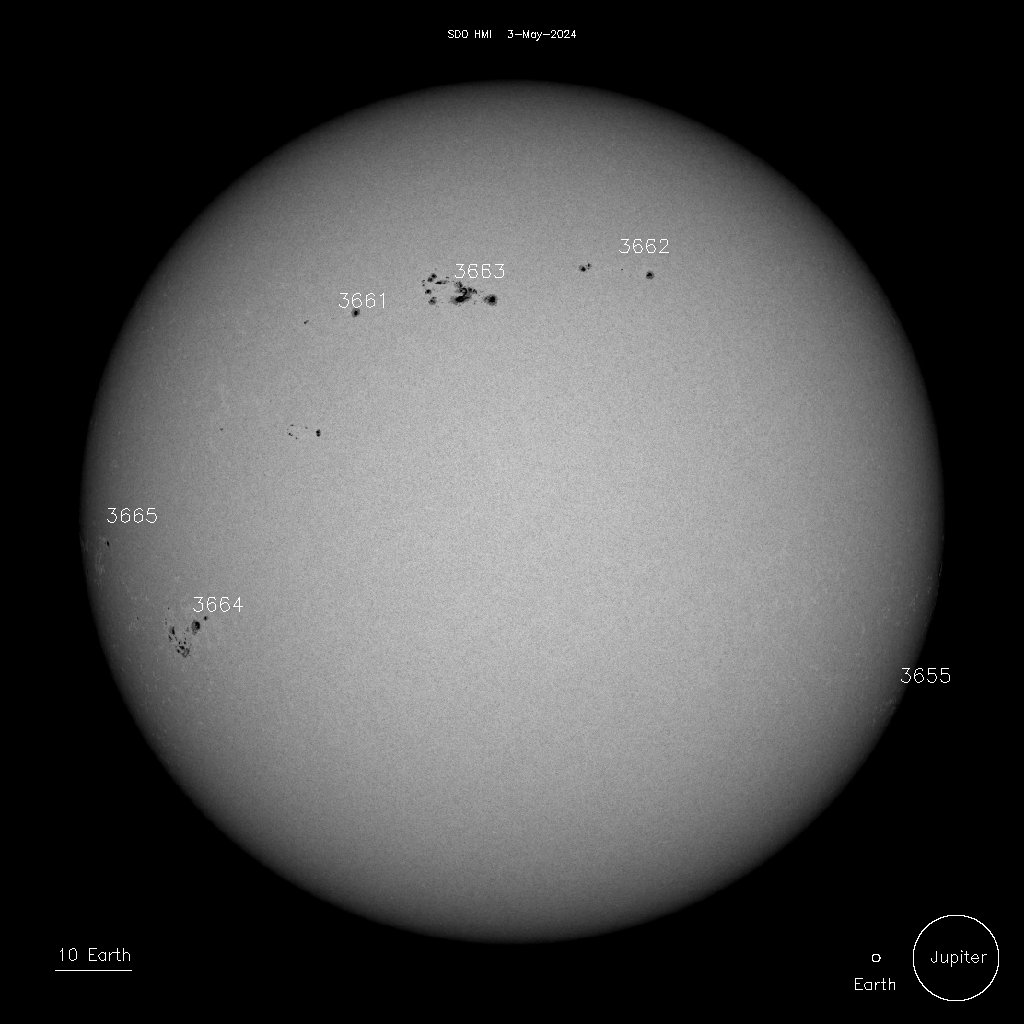
If you log on to www.spaceweather.com, you will see a current picture of the sun from the U.S. Solar and Heliospheric Observatory (SOHO) with but a single tiny sunspot, dubbed number 992. The previous time a cycle was delayed like this, according to Chapman, was during what was called the Dalton Minimum, a particularly cold period that lasted several decades starting in 1790. "Northern winters became ferocious," he says.
The success of Napoleon's march was not in the stars, at least not in the one closest to the Earth.
This has been a winter of record cold and record snowfalls. The four major agencies tracking Earth's temperature, including NASA's Goddard Institute, report the earth cooled 0.7C in 2007, the fastest decline in the age of instrumentation, putting us back to where the Earth was in 1930.
It snowed in Baghdad for the first time in centuries, and Chapman says "the extent of Antarctic sea ice . . . was the greatest on record since James Cook discovered the place in 1770."
So far this year, SOHO has detected just three sunspots, including number 992, which appeared on Monday. One was found in January and lasted only two days. Another appeared earlier this month but vanished within 24 hours. There should be more, many more. At its peak, the sun should look like a teenager's face before the prom.
Kenneth Tapping, a solar researcher and project director for Canada's National Research Council, oversees the operation of a 60-year-old radio telescope that he calls a "stethoscope for the sun."
Tapping reports no change in the sun's magnetic field so far this cycle and warns that if the sun remains quiet for another year or two, it may indicate another repeat of that period of drastic cooling of the Earth, bringing massive snowfall and severe weather to the Northern Hemisphere.
Chapman says the temperate climate we now enjoy is the exception, not the rule. We are currently in an interglacial period, the Holocene. "Under normal conditions," he says, "most of North America and Europe (is) buried under about 1.5 kilometers of ice."
Prisoners of the Sun I.
Quotes:
A former NASA astronaut says the same solar phenomenon that doomed Napoleon's army may soon stop Al Gore's march to glory cold. Prepare for the big chill.
Napoleon's retreat from Moscow is a legendary military disaster. While historians and military buffs note the toll the Russian winter took on La Grande Armee, few if any appreciate the role solar activity, or the lack of it, played in one of the great military reversals in history.
Geophysicist Phil Chapman, the first Australian to become a NASA astronaut, and who served as mission specialist on the Apollo 14 lunar mission, writes in the Down Under newspaper the Australian that "the rout of Napoleon's Grand Army from Moscow was at least partly due to the lack of sunspots."
This is more than a historical footnote. The same pattern of solar activity that doomed Napoleon is occurring as we speak.
The sun goes through a series of 11-year cycles in which sunspots fluctuate in both number and intensity, greatly influencing Earth's climate and weather. The end of each cycle is called a solar minimum, where sunspot activity is at a low point. Activity usually picks up after that as each new cycle begins.
As Chapman notes, the most recent minimum occurred in March 2007. Sunspot activity should have increased shortly after that but sunspot activity has remained at a virtual standstill.
If you log on to www.spaceweather.com, you will see a current picture of the sun from the U.S. Solar and Heliospheric Observatory (SOHO) with but a single tiny sunspot, dubbed number 992. The previous time a cycle was delayed like this, according to Chapman, was during what was called the Dalton Minimum, a particularly cold period that lasted several decades starting in 1790. "Northern winters became ferocious," he says.
The success of Napoleon's march was not in the stars, at least not in the one closest to the Earth.
This has been a winter of record cold and record snowfalls. The four major agencies tracking Earth's temperature, including NASA's Goddard Institute, report the earth cooled 0.7C in 2007, the fastest decline in the age of instrumentation, putting us back to where the Earth was in 1930.
It snowed in Baghdad for the first time in centuries, and Chapman says "the extent of Antarctic sea ice . . . was the greatest on record since James Cook discovered the place in 1770."
So far this year, SOHO has detected just three sunspots, including number 992, which appeared on Monday. One was found in January and lasted only two days. Another appeared earlier this month but vanished within 24 hours. There should be more, many more. At its peak, the sun should look like a teenager's face before the prom.
Kenneth Tapping, a solar researcher and project director for Canada's National Research Council, oversees the operation of a 60-year-old radio telescope that he calls a "stethoscope for the sun."
Tapping reports no change in the sun's magnetic field so far this cycle and warns that if the sun remains quiet for another year or two, it may indicate another repeat of that period of drastic cooling of the Earth, bringing massive snowfall and severe weather to the Northern Hemisphere.
Chapman says the temperate climate we now enjoy is the exception, not the rule. We are currently in an interglacial period, the Holocene. "Under normal conditions," he says, "most of North America and Europe (is) buried under about 1.5 kilometers of ice."
Prisoners of the Sun I.
Thursday, April 17, 2008
An hour with Boone Pickens.
Okay, technically 51:29, but who's counting.. Mr. Pickens talks about oil & energy, but he covers other topics too, and he's a pretty funny guy.
A geologist, a savy, seen-it-all businessman, a decent American, he's warning us about our energy situation, and we seem (so far) not to be listening.
Bloomberg: Boone Pickens Expects Oil Prices to Continue to Rise.
A geologist, a savy, seen-it-all businessman, a decent American, he's warning us about our energy situation, and we seem (so far) not to be listening.
Bloomberg: Boone Pickens Expects Oil Prices to Continue to Rise.
Wednesday, April 16, 2008
Be Bullish.
WSJ: Crude, Heating Oil, Gas All End at Record Highs.
Quotes:
Buyers also found inspiration in global demand. China imported 1.66 million tons of diesel from January through March, the General Administration of Customs reported Tuesday, a sevenfold increase from the 230,000 tons imported in the same period last year.
Yahoo Tech Ticker: High Oil Prices? You Ain't Seen Nothing Yet.
Yahoo Tech Ticker: 6 Ways to Profit from 'Peak Oil'.
Quotes:
Earlier, Charles Maxwell, senior energy analyst at Weeden & Co., made the case that "peak oil" theory is real and inevitable, and that $300 oil is coming in the next decade. While a frightening prospect with major societal implications, it's also one with significant potential for profit.
When investing in energy for the long run, it's best to avoid the major oil companies like Exxon Mobil, Chevron, and ConocoPhillips, Maxwell says. There's a reason these firms are cutting back on exploration even as oil prices and demand are rising: Facing both geological and geopolitical obstacles, they cannot find reserves big enough to move the production needle.
Instead, Maxwell recommends a basket of companies with "long-lived reserves," including Brazil's Petrobras and Canadian tar sands plays such as Encana and Canadian Natural Resources. Unlike the majors, these firms will be able to maintain and even increase production into the next decade, and thus able to take advantage of the expected sharp rise in oil prices.
------------------------------------------
Technically, he recommends PBR, LUKOY, SU, ECA, CNQ, NXY in the above video.
Quotes:
Buyers also found inspiration in global demand. China imported 1.66 million tons of diesel from January through March, the General Administration of Customs reported Tuesday, a sevenfold increase from the 230,000 tons imported in the same period last year.
Yahoo Tech Ticker: High Oil Prices? You Ain't Seen Nothing Yet.
Yahoo Tech Ticker: 6 Ways to Profit from 'Peak Oil'.
Quotes:
Earlier, Charles Maxwell, senior energy analyst at Weeden & Co., made the case that "peak oil" theory is real and inevitable, and that $300 oil is coming in the next decade. While a frightening prospect with major societal implications, it's also one with significant potential for profit.
When investing in energy for the long run, it's best to avoid the major oil companies like Exxon Mobil, Chevron, and ConocoPhillips, Maxwell says. There's a reason these firms are cutting back on exploration even as oil prices and demand are rising: Facing both geological and geopolitical obstacles, they cannot find reserves big enough to move the production needle.
Instead, Maxwell recommends a basket of companies with "long-lived reserves," including Brazil's Petrobras and Canadian tar sands plays such as Encana and Canadian Natural Resources. Unlike the majors, these firms will be able to maintain and even increase production into the next decade, and thus able to take advantage of the expected sharp rise in oil prices.
------------------------------------------
Technically, he recommends PBR, LUKOY, SU, ECA, CNQ, NXY in the above video.
Thursday, April 10, 2008
Prisoners of the Sun.
First, kudos to anybody that caught that "Land of Black Gold" and "Prisoners of the Sun" are both Tintin adventures. Considering the limited audience here, and the obscure reference that makes.. probably nobody. Oh well. Spielberg's making a picture, or apparently three.
We are all (myself included) pretty sold on the theory of global warming by now. Humans are producing increasing carbon dioxide.. greenhouse gas.. climate warms, etc.
But, in an irony that will probably not be lost on history even if it has so far been lost on contemporary journalists, the year after Al Gore wins the Nobel Prize for his work on climate change [not a big fan personally of Al Gore, bit a wind bag if you ask me.. I digress], there came basically out of nowhere a good, old fashioned cold and snowy winter for North America and parts of Asia. Which by the way, caused us to burn a lot of natural gas and heating oil, and is, in my opinion, responsible for the strength in oil prices this year (and natural gas too).
Obviously, one season does not a trend make, but it appears there is another variable involved in our climate, one that is generally right in front of our eyes and which we seem to have left out of the global temperature equation altogether:
The sun, and it's associated cycles.
I need to do more research on this topic, but it's possible we have here what Micheal Steinhardt would refer to as a variant perception.
And, um, if there is truth to the below theory, it could be a big one.
The Bellingham Herald: Sun’s shift could mean global chill.
Quotes:
Fluctuations in solar radiation could mean colder weather in the decades ahead, despite all the talk about global warming, retired Western Washington University geologist Don Easterbrook said Tuesday.
Easterbrook is convinced that the threat of global warming from mankind’s carbon dioxide pollution is overblown.
In a campus lecture, he cited centuries of climate data in an effort to convince a somewhat skeptical audience that carbon dioxide’s impact on climate is being much exaggerated by former U.S. Vice President Al Gore and by scientists who appear to have won the debate over global warming.
“Despite all you hear about the debate being over, the debate is just starting,” Easterbrook said.
30-YEAR TREND
Easterbrook doesn’t deny that the Earth’s climate has been warming slowly since about 1980. But he argued that this warming trend fits a longstanding pattern of warming and cooling cycles that last roughly 30 years. Sunspot activity and other solar changes appear to explain the 30-year cycles, he said.
If that pattern persists, the earth could now be close to the next 30-year cooling cycle, Easterbrook said.
He noted that the 2007-08 winter set records for cold and snow in many parts of the globe. According to the data he displayed, the Earth’s temperature hit a peak in 1998 and has been steady or slightly cooler since then.
“One cold winter doesn’t mean much of anything,” he said. “A 10-year trend is interesting.”
He contended that warming periods appear to match periods of sunspot activity, which currently is at a low point.
Easterbrook noted that astrophysicists have been expecting that activity to begin increasing soon, but so far it has not.
Prolonged periods of low activity could lead to a dramatic cooling such as occurred in Europe during the so-called “Little Ice Age,” a term loosely used to describe cooler weather in the 14th to 19th centuries, Easterbrook said.
....
If the warming trend of the past 30 years really is reversing, it won’t take too long to become apparent.
“In three years we’ll at least know the direction we are headed,” Easterbrook said. “If we are one degree warmer in 2010 than we were in 2005, I will appear here and eat my words.”
While Easterbrook is skeptical about the risks from carbon dioxide, he said he strongly supports efforts to curb air pollution.
“There are a lot of things being put in the atmosphere right now that are way more dangerous than (carbon dioxide,)” he said.
But Easterbrook is far more worried about global population growth.
At present growth rates, the world would add another 3 billion people by 2050, putting enormous strains on supplies of food, water and other resources.
“Nobody is talking about it,” he said. “Nobody is doing anything about it, and it’s happening.”
The Australian: Climate facts to warm to.
Quotes:
"Is the Earth still warming?"
She replied: "No, actually, there has been cooling, if you take 1998 as your point of reference. If you take 2002 as your point of reference, then temperatures have plateaued. This is certainly not what you'd expect if carbon dioxide is driving temperature because carbon dioxide levels have been increasing but temperatures have actually been coming down over the last 10 years."
Duffy: "Is this a matter of any controversy?"
Marohasy: "Actually, no. The head of the IPCC (Intergovernmental Panel on Climate Change) has actually acknowledged it. He talks about the apparent plateau in temperatures so far this century. So he recognises that in this century, over the past eight years, temperatures have plateaued ... This is not what you'd expect, as I said, because if carbon dioxide is driving temperature then you'd expect that, given carbon dioxide levels have been continuing to increase, temperatures should be going up ... So (it's) very unexpected, not something that's being discussed. It should be being discussed, though, because it's very significant."
NASA: Long Range Solar Forecast.
Quotes:
The Sun's Great Conveyor Belt has slowed to a record-low crawl, according to research by NASA solar physicist David Hathaway. "It's off the bottom of the charts," he says. "This has important repercussions for future solar activity."
The Great Conveyor Belt is a massive circulating current of fire (hot plasma) within the Sun. It has two branches, north and south, each taking about 40 years to perform one complete circuit. Researchers believe the turning of the belt controls the sunspot cycle, and that's why the slowdown is important.
"Normally, the conveyor belt moves about 1 meter per second—walking pace," says Hathaway. "That's how it has been since the late 19th century." In recent years, however, the belt has decelerated to 0.75 m/s in the north and 0.35 m/s in the south. "We've never seen speeds so low."
According to theory and observation, the speed of the belt foretells the intensity of sunspot activity ~20 years in the future. A slow belt means lower solar activity; a fast belt means stronger activity. The reasons for this are explained in the Science@NASA story Solar Storm Warning.
"The slowdown we see now means that Solar Cycle 25, peaking around the year 2022, could be one of the weakest in centuries," says Hathaway.
You can read an update on solar activity here:
AARL: The K7RA Solar Update.
And view current sunspots here (none currently):
NASA: Sunspots.
Theory details:
Space and Science Research Center: The RC Theory.
I haven't read these two books yet, but I plan to:
Amazon: The Chilling Stars. A Cosmic View on Climate Change.
Amazon: Unstoppable Global Warming (Every 1,500 Years).
[Disclosure: If you buy the books via those links, I get a commission from Amazon. Just so you know..]
We are all (myself included) pretty sold on the theory of global warming by now. Humans are producing increasing carbon dioxide.. greenhouse gas.. climate warms, etc.
But, in an irony that will probably not be lost on history even if it has so far been lost on contemporary journalists, the year after Al Gore wins the Nobel Prize for his work on climate change [not a big fan personally of Al Gore, bit a wind bag if you ask me.. I digress], there came basically out of nowhere a good, old fashioned cold and snowy winter for North America and parts of Asia. Which by the way, caused us to burn a lot of natural gas and heating oil, and is, in my opinion, responsible for the strength in oil prices this year (and natural gas too).
Obviously, one season does not a trend make, but it appears there is another variable involved in our climate, one that is generally right in front of our eyes and which we seem to have left out of the global temperature equation altogether:
The sun, and it's associated cycles.
I need to do more research on this topic, but it's possible we have here what Micheal Steinhardt would refer to as a variant perception.
And, um, if there is truth to the below theory, it could be a big one.
The Bellingham Herald: Sun’s shift could mean global chill.
Quotes:
Fluctuations in solar radiation could mean colder weather in the decades ahead, despite all the talk about global warming, retired Western Washington University geologist Don Easterbrook said Tuesday.
Easterbrook is convinced that the threat of global warming from mankind’s carbon dioxide pollution is overblown.
In a campus lecture, he cited centuries of climate data in an effort to convince a somewhat skeptical audience that carbon dioxide’s impact on climate is being much exaggerated by former U.S. Vice President Al Gore and by scientists who appear to have won the debate over global warming.
“Despite all you hear about the debate being over, the debate is just starting,” Easterbrook said.
30-YEAR TREND
Easterbrook doesn’t deny that the Earth’s climate has been warming slowly since about 1980. But he argued that this warming trend fits a longstanding pattern of warming and cooling cycles that last roughly 30 years. Sunspot activity and other solar changes appear to explain the 30-year cycles, he said.
If that pattern persists, the earth could now be close to the next 30-year cooling cycle, Easterbrook said.
He noted that the 2007-08 winter set records for cold and snow in many parts of the globe. According to the data he displayed, the Earth’s temperature hit a peak in 1998 and has been steady or slightly cooler since then.
“One cold winter doesn’t mean much of anything,” he said. “A 10-year trend is interesting.”
He contended that warming periods appear to match periods of sunspot activity, which currently is at a low point.
Easterbrook noted that astrophysicists have been expecting that activity to begin increasing soon, but so far it has not.
Prolonged periods of low activity could lead to a dramatic cooling such as occurred in Europe during the so-called “Little Ice Age,” a term loosely used to describe cooler weather in the 14th to 19th centuries, Easterbrook said.
....
If the warming trend of the past 30 years really is reversing, it won’t take too long to become apparent.
“In three years we’ll at least know the direction we are headed,” Easterbrook said. “If we are one degree warmer in 2010 than we were in 2005, I will appear here and eat my words.”
While Easterbrook is skeptical about the risks from carbon dioxide, he said he strongly supports efforts to curb air pollution.
“There are a lot of things being put in the atmosphere right now that are way more dangerous than (carbon dioxide,)” he said.
But Easterbrook is far more worried about global population growth.
At present growth rates, the world would add another 3 billion people by 2050, putting enormous strains on supplies of food, water and other resources.
“Nobody is talking about it,” he said. “Nobody is doing anything about it, and it’s happening.”
The Australian: Climate facts to warm to.
Quotes:
"Is the Earth still warming?"
She replied: "No, actually, there has been cooling, if you take 1998 as your point of reference. If you take 2002 as your point of reference, then temperatures have plateaued. This is certainly not what you'd expect if carbon dioxide is driving temperature because carbon dioxide levels have been increasing but temperatures have actually been coming down over the last 10 years."
Duffy: "Is this a matter of any controversy?"
Marohasy: "Actually, no. The head of the IPCC (Intergovernmental Panel on Climate Change) has actually acknowledged it. He talks about the apparent plateau in temperatures so far this century. So he recognises that in this century, over the past eight years, temperatures have plateaued ... This is not what you'd expect, as I said, because if carbon dioxide is driving temperature then you'd expect that, given carbon dioxide levels have been continuing to increase, temperatures should be going up ... So (it's) very unexpected, not something that's being discussed. It should be being discussed, though, because it's very significant."
NASA: Long Range Solar Forecast.
Quotes:
The Sun's Great Conveyor Belt has slowed to a record-low crawl, according to research by NASA solar physicist David Hathaway. "It's off the bottom of the charts," he says. "This has important repercussions for future solar activity."
The Great Conveyor Belt is a massive circulating current of fire (hot plasma) within the Sun. It has two branches, north and south, each taking about 40 years to perform one complete circuit. Researchers believe the turning of the belt controls the sunspot cycle, and that's why the slowdown is important.
"Normally, the conveyor belt moves about 1 meter per second—walking pace," says Hathaway. "That's how it has been since the late 19th century." In recent years, however, the belt has decelerated to 0.75 m/s in the north and 0.35 m/s in the south. "We've never seen speeds so low."
According to theory and observation, the speed of the belt foretells the intensity of sunspot activity ~20 years in the future. A slow belt means lower solar activity; a fast belt means stronger activity. The reasons for this are explained in the Science@NASA story Solar Storm Warning.
"The slowdown we see now means that Solar Cycle 25, peaking around the year 2022, could be one of the weakest in centuries," says Hathaway.
You can read an update on solar activity here:
AARL: The K7RA Solar Update.
And view current sunspots here (none currently):
NASA: Sunspots.
Theory details:
Space and Science Research Center: The RC Theory.
I haven't read these two books yet, but I plan to:
Amazon: The Chilling Stars. A Cosmic View on Climate Change.
Amazon: Unstoppable Global Warming (Every 1,500 Years).
[Disclosure: If you buy the books via those links, I get a commission from Amazon. Just so you know..]
Wednesday, April 09, 2008
Charles Nenner: Energy Mania Coming.
Charles Nenner predicting an energy and emerging markets mania to come, sees energy as one place to be for a couple of years.
CNBC: Oracle of Eyes.
P.S. Coming?
P.P.S. How did they keep Joe Kernen quiet in this piece?
CNBC: Oracle of Eyes.
P.S. Coming?
P.P.S. How did they keep Joe Kernen quiet in this piece?
Thursday, April 03, 2008
Help, Svetlana, stop this crazy thing!
Russia, which was able to outproduce Saudi Arabia for a couple of years there, may be on the oil production treadmill now too.
Reuters: Russian March oil output falls again, exports recover.
Quotes:
Russia failed to grow its oil output for a third month in a row in March and closed the first quarter with a one percent production decline year-on-year, confirming gloomy outlook by analysts for the whole of 2008.
Energy Ministry data showed on Wednesday March oil production edged down to 9.76 million barrels per day from 9.79 million bpd in February, and well below the post Soviet high of 9.93 million bpd reached in October last year.
In absolute figures, March production was over 5 million barrels - the size of five large tankers - down from October.
Since October, oil production in Russia has been balancing between decline and stagnation, prompting many analysts to revise down their oil production forecasts for 2008.
Reuters: Russian March oil output falls again, exports recover.
Quotes:
Russia failed to grow its oil output for a third month in a row in March and closed the first quarter with a one percent production decline year-on-year, confirming gloomy outlook by analysts for the whole of 2008.
Energy Ministry data showed on Wednesday March oil production edged down to 9.76 million barrels per day from 9.79 million bpd in February, and well below the post Soviet high of 9.93 million bpd reached in October last year.
In absolute figures, March production was over 5 million barrels - the size of five large tankers - down from October.
Since October, oil production in Russia has been balancing between decline and stagnation, prompting many analysts to revise down their oil production forecasts for 2008.
Tuesday, March 25, 2008
Play that funky music white boy.
My prediction: Until we get this energy mess addressed, stocks as represented by the whole market/indexes aren't going to do anything worth writing a Page One Wall Street Journal article about.
On a side note, ever notice how white (and generally older) the Peak Oil establishment is? Sheesh. [Okay, some exceptions, but generally..] This mostly has to do with them being older oil types, I know.
Next prediction: Peak oil ain't gaining real traction until we pull in some hot chicks.
And maybe we need a band.. [My suspicion is that most people hear the lyrics of Sheryl Crowe's song as suggesting gasoline will be FREE, whee!, rather than understanding the message.] I digress.
Oh, if and hopefully when we realistically address the energy issue (way, and I mean, -WAY- simpler said than done), the market will rock, I predict.
WSJ: Stocks Tarnished By 'Lost Decade', U.S. Shares in Longest Funk Since 1970s;
Credit Crunch Could Prolong Weakness.
Quotes:
Over the past 200 years, the stock market's steady upward march occasionally has been disrupted for long stretches, most recently during the Great Depression and the inflation-plagued 1970s. The current market turmoil suggests that we may be in another lost decade.
The stock market is trading right where it was nine years ago. Stocks, long touted as the best investment for the long term, have been one of the worst investments over the nine-year period, trounced even by lowly Treasury bonds.
CNBC: Pickens: Oil Going to Remain Above $100 a Barrel.
Quotes:
Pickens thinks it's a mistake to follow daily price changes too closely.
"I can't play day trades, whether it's down one day, up the next, the volatility just eats my lunch," he said. "I've got to make a far-out play and stick with it."
....
Pickens says he's bullish on natural gas as well as oil, and he has a portfolio to prove it.
"My...picks for natural gas would be Cheaspeake Energy Corp [CHK], XTO Energy Inc [XTO], Sandridge Energy Inc [SD], and, if you're going to play the natural-gas fueling deal, you'd go to Clean Energy Fuels Corp [CLNE], on the Nasdaq," he said. "If you're going to play oil, on the domestics, I would say that Continental Resources [CLR], and Denbury Resources Inc [DNR] are the two best, plus Suncor Energy Inc [SU] the Canadian oil-sands one. Those are all in my portfolio."
CNBC: T. Boone’s Energy Plan.
CNBC: Oil Firms 'In Liquidation,' Says 'Peak Oil' Advocate.
Quotes:
All major oil firms, he said, are "overlooking the fact that they are actually in liquidation, their production has been in decline for several years [and] no matter how much money they intend to spend, they just can’t get ahead of their [production] decline curves. And their proven reserves are shrinking very rapidly.”
WSJ: Saudis' Big Gas Supply Looks Like It Is a Mirage.
Quotes:
Saudi Arabia's boast that its southern desert region contains vast reserves of natural gas is facing growing skepticism, amid a string of exploration setbacks by international oil companies operating there.
The kingdom had hoped that gas in the Rub al Khali, a vast desert that translates into English as the Empty Quarter, would be a key source of fuel for its booming economy. If the region turns out to be as empty as its name implies, Saudi Arabia runs the risk of a gas-supply crunch within the next decade at today's rate of demand.
On a side note, ever notice how white (and generally older) the Peak Oil establishment is? Sheesh. [Okay, some exceptions, but generally..] This mostly has to do with them being older oil types, I know.
Next prediction: Peak oil ain't gaining real traction until we pull in some hot chicks.
And maybe we need a band.. [My suspicion is that most people hear the lyrics of Sheryl Crowe's song as suggesting gasoline will be FREE, whee!, rather than understanding the message.] I digress.
Oh, if and hopefully when we realistically address the energy issue (way, and I mean, -WAY- simpler said than done), the market will rock, I predict.
WSJ: Stocks Tarnished By 'Lost Decade', U.S. Shares in Longest Funk Since 1970s;
Credit Crunch Could Prolong Weakness.
Quotes:
Over the past 200 years, the stock market's steady upward march occasionally has been disrupted for long stretches, most recently during the Great Depression and the inflation-plagued 1970s. The current market turmoil suggests that we may be in another lost decade.
The stock market is trading right where it was nine years ago. Stocks, long touted as the best investment for the long term, have been one of the worst investments over the nine-year period, trounced even by lowly Treasury bonds.
CNBC: Pickens: Oil Going to Remain Above $100 a Barrel.
Quotes:
Pickens thinks it's a mistake to follow daily price changes too closely.
"I can't play day trades, whether it's down one day, up the next, the volatility just eats my lunch," he said. "I've got to make a far-out play and stick with it."
....
Pickens says he's bullish on natural gas as well as oil, and he has a portfolio to prove it.
"My...picks for natural gas would be Cheaspeake Energy Corp [CHK], XTO Energy Inc [XTO], Sandridge Energy Inc [SD], and, if you're going to play the natural-gas fueling deal, you'd go to Clean Energy Fuels Corp [CLNE], on the Nasdaq," he said. "If you're going to play oil, on the domestics, I would say that Continental Resources [CLR], and Denbury Resources Inc [DNR] are the two best, plus Suncor Energy Inc [SU] the Canadian oil-sands one. Those are all in my portfolio."
CNBC: T. Boone’s Energy Plan.
CNBC: Oil Firms 'In Liquidation,' Says 'Peak Oil' Advocate.
Quotes:
All major oil firms, he said, are "overlooking the fact that they are actually in liquidation, their production has been in decline for several years [and] no matter how much money they intend to spend, they just can’t get ahead of their [production] decline curves. And their proven reserves are shrinking very rapidly.”
WSJ: Saudis' Big Gas Supply Looks Like It Is a Mirage.
Quotes:
Saudi Arabia's boast that its southern desert region contains vast reserves of natural gas is facing growing skepticism, amid a string of exploration setbacks by international oil companies operating there.
The kingdom had hoped that gas in the Rub al Khali, a vast desert that translates into English as the Empty Quarter, would be a key source of fuel for its booming economy. If the region turns out to be as empty as its name implies, Saudi Arabia runs the risk of a gas-supply crunch within the next decade at today's rate of demand.
Wednesday, March 19, 2008
Bernanke Begins (2008).
Genre: Drama / Crime / Thriller
Tagline: It's not who he replaces but what he does that defines him.
Plot Outline:
Gotham is in crisis. The citizenry has lost confidence, the market's in a panic, home-less are everywhere, and the city's headlines are dominated by news of Bears running wild. Heck, it's gotten so bad, even The Joker's moved out!
Where's Batman? Can he save the day?
Cast:
Ben Bernanke -- Batman
Hank Paulson -- Robin
Jim Rogers -- The Joker
Ben Stein -- Himself
Okay, all kidding aside, I think we're seeing a moment where the Fed gains some traction, Ben Bernanke gains the market's confidence, the US financial authority reboot gets a little breathing room, and some of the dollar bears/market bears/gold bugs reign in their horns [and maybe it's time to go short gold, the euro, or the yen for a while].
The difficulties aren't over, but the relative bottom may be in.
Tagline: It's not who he replaces but what he does that defines him.
Plot Outline:
Gotham is in crisis. The citizenry has lost confidence, the market's in a panic, home-less are everywhere, and the city's headlines are dominated by news of Bears running wild. Heck, it's gotten so bad, even The Joker's moved out!
Where's Batman? Can he save the day?
Cast:
Ben Bernanke -- Batman
Hank Paulson -- Robin
Jim Rogers -- The Joker
Ben Stein -- Himself
Okay, all kidding aside, I think we're seeing a moment where the Fed gains some traction, Ben Bernanke gains the market's confidence, the US financial authority reboot gets a little breathing room, and some of the dollar bears/market bears/gold bugs reign in their horns [and maybe it's time to go short gold, the euro, or the yen for a while].
The difficulties aren't over, but the relative bottom may be in.
Sunday, March 16, 2008
For that price, I'd have &^%$#@ bought Bear Stearns.
I was thinking I'd be buying Goldman Sachs this week, instead I'll be buying JPMorgan.
I'm not a fan of the financials (actually I hate 'em), it may not even be the bottom, and it's probably going to be a while before the smoke clears, but you have to admire this trade that Jamie Dimon just made.
How amazing is it that they kicked this guy out of Citibank? Makes me want to short Citi for good measure.
Bloomberg: JPMorgan Buys Bear Stearns for $2 a Share After Clients Flee.
I'm not a fan of the financials (actually I hate 'em), it may not even be the bottom, and it's probably going to be a while before the smoke clears, but you have to admire this trade that Jamie Dimon just made.
How amazing is it that they kicked this guy out of Citibank? Makes me want to short Citi for good measure.
Bloomberg: JPMorgan Buys Bear Stearns for $2 a Share After Clients Flee.
Friday, March 14, 2008
In energy we trust. Everybody else pays cash.
Almost time to buy Goldman Sachs, I think.
CNBC: Bear Stearns Gets Funding to Restore Confidence.
Quotes:
Bear Stearns received a secured loan facility from JPMorgan Chase as part of steps it is taking to shore up the market's confidence in its operations.
JPMorgan Chase will provide a secured loan facility for an initial period of up to 28 days allowing Bear Stearns to access liquidity as needed.
The Fed, through its discount window, will provide non-recourse, back-to-back financing to JPMorgan Chase, the commercial bank said. JPMorgan said it does not believe this transaction exposes its shareholders to any material risk.
"Bear Stearns has been the subject of a multitude of market rumors regarding our liquidity," said Alan Schwartz, president and chief executive in Bear Stearns, in a written statement. "We have tried to confront and dispel these rumors and parse fact from fiction. Nevertheless, amidst this market chatter, our liquidity position in the last 24 hours had significantly deteriorated. We took this important step to restore confidence in us in the marketplace, strengthen our liquidity and allow us to continue normal operations."
CNBC: Bear Stearns Gets Funding to Restore Confidence.
Quotes:
Bear Stearns received a secured loan facility from JPMorgan Chase as part of steps it is taking to shore up the market's confidence in its operations.
JPMorgan Chase will provide a secured loan facility for an initial period of up to 28 days allowing Bear Stearns to access liquidity as needed.
The Fed, through its discount window, will provide non-recourse, back-to-back financing to JPMorgan Chase, the commercial bank said. JPMorgan said it does not believe this transaction exposes its shareholders to any material risk.
"Bear Stearns has been the subject of a multitude of market rumors regarding our liquidity," said Alan Schwartz, president and chief executive in Bear Stearns, in a written statement. "We have tried to confront and dispel these rumors and parse fact from fiction. Nevertheless, amidst this market chatter, our liquidity position in the last 24 hours had significantly deteriorated. We took this important step to restore confidence in us in the marketplace, strengthen our liquidity and allow us to continue normal operations."
Wednesday, March 12, 2008
Aubrey McClendon Still Buying.
Aubrey McClendon, CEO of Chesapeake Energy continues his campaign of aggressively buying his companies' stock.
The company was on a large on-shore leasing spree for a while, accumulated a significant inventory, and now is working on bringing it's natural gas to production. It's been steadily rising up the list of American natural gas producers; it's now at number 3. It has a lot of debt, but with natural gas prices doing well, a lot of drilling ahead of it, a successful hedging program, and even a respected weather team, they look like they have a lot of room to run.
I own some already, and may buy a bit more on a dip.
The company was on a large on-shore leasing spree for a while, accumulated a significant inventory, and now is working on bringing it's natural gas to production. It's been steadily rising up the list of American natural gas producers; it's now at number 3. It has a lot of debt, but with natural gas prices doing well, a lot of drilling ahead of it, a successful hedging program, and even a respected weather team, they look like they have a lot of room to run.
I own some already, and may buy a bit more on a dip.
Tuesday, March 11, 2008
World's central banks hit the gas.
This move in oil to $109 has been pretty awe inspiring, and it even stomped all over a bearish call by Boone Pickens.
It wasn't terribly clear what was behind the move, as inventories are trending up, and gasoline demand appears to be backing off, but now we know.
The world's central banks are hitting the gas.
CNBC: Fed Leads Coordinated Move to Boost Liquidity.
Now that the cat is out of the bag, I tend to think that this oil rally will temper.
It wasn't terribly clear what was behind the move, as inventories are trending up, and gasoline demand appears to be backing off, but now we know.
The world's central banks are hitting the gas.
CNBC: Fed Leads Coordinated Move to Boost Liquidity.
Now that the cat is out of the bag, I tend to think that this oil rally will temper.
Saturday, March 08, 2008
Surprise: Matthew Simmons on Fast Money.
I've never seen the Fast Money traders as rapt, sober faced and quip-less as this appearance by Matthew Simmons, where Matt makes more jokes than this usually boisterous crew do.
The reason, of course: If he's right, and oil has peaked, it has implications for virtually every aspect of our economic system and lifestyle.
Among his comments, he says oil has probably peaked, it will get scarcer, prices will rise, and he gives the example of how in London they are paying $9 a gallon for gasoline, which equates to $378 a barrel for oil.
Surprise Friday indeed.. Video half way down the page.
CNBC: Surprise Friday.
The reason, of course: If he's right, and oil has peaked, it has implications for virtually every aspect of our economic system and lifestyle.
Among his comments, he says oil has probably peaked, it will get scarcer, prices will rise, and he gives the example of how in London they are paying $9 a gallon for gasoline, which equates to $378 a barrel for oil.
Surprise Friday indeed.. Video half way down the page.
CNBC: Surprise Friday.
Thursday, March 06, 2008
No law at all in Deadwood.
Some people, me included, would argue that the root of our current problems lies with the 'see no bubble' policies of Alan Greenspan as Fed Chairman. Internet bubble, real estate bubble, ARM bubble, it was all good under Easy Al, who couldn't stand to see a party end on his watch, even for the greater good, and even though he was supposed to be 'the law'. Heck, he even pimped some of this stuff himself - Take an ARM at a generation low in interest rates folks - forget the hangover, I've got something for that too!
One glaring example:
USAToday, Feb 24, 2004: Greenspan says ARMs might be better deal.
Quotes:
Federal Reserve Chairman Alan Greenspan said Monday that Americans' preference for long-term, fixed-rate mortgages means many are paying more than necessary for their homes and suggested consumers would benefit if lenders offered more alternatives.
While borrowers can refinance fixed-rate mortgages, Greenspan said homeowners were paying as much as 0.5 to 1.2 percentage points for that right and the protection against a potential rate rise, which could increase annual after-tax payments by several thousand dollars.
He said a Fed study suggested many homeowners could have saved tens of thousands of dollars in the last decade if they had ARMs. Those savings would not have been realized, however, had interest rates shot up.
"American consumers might benefit if lenders provided greater mortgage product alternatives to the traditional fixed-rate mortgage," Greenspan said.
------------------
But that's the past, and we live in the present, with a burst debt bubble and consequences like these:
Citigroup to Pare Mortgage Holdings by $45 Billion.
Credit Swaps Thwart Fed's Ease as Debt Costs Surge.
Agency Mortgage-Bond Spreads Rise; Markets `Utterly Unhinged'.
Homeowner Equity Below 50% for First Time Since 1945.
As Dollar Tumbles, Should Fed Stop Cutting Rates?
Foreclosures at record as household wealth falls.
------------------
The upside of a crisis is that there will be opportunity. To mix metaphors, we're in a forest fire, the dead wood and the good wood is burning, but ultimately this is the way the forest rebuilds. Wait for the bankruptcies though.
MarketWatch: Scion Capital shuts Asian funds to focus on U.S.
Quotes:
Scion Capital LLC, a $1 billion hedge fund firm run by Michael Burry, is shutting its Asian funds to focus on opportunities that will be created by a U.S. economic slowdown.
....
"The primary motivation for this move is that I foresee a significant opportunity to invest in dramatically undervalued distressed assets and out-of-favor businesses over the next several years," Burry wrote.
"The sheer magnitude of the troubles facing the leading companies in what is still the world's largest and most significant economy cannot be missed," he explained. "The global credit bubble has burst, and the world has not yet learned the full impact."
------------------
Extra credit: Al Greenspan or Al Swearengen?:
"God rest the soul of that poor family .... and pussy's half price, next fifteen minutes!"
One glaring example:
USAToday, Feb 24, 2004: Greenspan says ARMs might be better deal.
Quotes:
Federal Reserve Chairman Alan Greenspan said Monday that Americans' preference for long-term, fixed-rate mortgages means many are paying more than necessary for their homes and suggested consumers would benefit if lenders offered more alternatives.
While borrowers can refinance fixed-rate mortgages, Greenspan said homeowners were paying as much as 0.5 to 1.2 percentage points for that right and the protection against a potential rate rise, which could increase annual after-tax payments by several thousand dollars.
He said a Fed study suggested many homeowners could have saved tens of thousands of dollars in the last decade if they had ARMs. Those savings would not have been realized, however, had interest rates shot up.
"American consumers might benefit if lenders provided greater mortgage product alternatives to the traditional fixed-rate mortgage," Greenspan said.
------------------
But that's the past, and we live in the present, with a burst debt bubble and consequences like these:
Citigroup to Pare Mortgage Holdings by $45 Billion.
Credit Swaps Thwart Fed's Ease as Debt Costs Surge.
Agency Mortgage-Bond Spreads Rise; Markets `Utterly Unhinged'.
Homeowner Equity Below 50% for First Time Since 1945.
As Dollar Tumbles, Should Fed Stop Cutting Rates?
Foreclosures at record as household wealth falls.
------------------
The upside of a crisis is that there will be opportunity. To mix metaphors, we're in a forest fire, the dead wood and the good wood is burning, but ultimately this is the way the forest rebuilds. Wait for the bankruptcies though.
MarketWatch: Scion Capital shuts Asian funds to focus on U.S.
Quotes:
Scion Capital LLC, a $1 billion hedge fund firm run by Michael Burry, is shutting its Asian funds to focus on opportunities that will be created by a U.S. economic slowdown.
....
"The primary motivation for this move is that I foresee a significant opportunity to invest in dramatically undervalued distressed assets and out-of-favor businesses over the next several years," Burry wrote.
"The sheer magnitude of the troubles facing the leading companies in what is still the world's largest and most significant economy cannot be missed," he explained. "The global credit bubble has burst, and the world has not yet learned the full impact."
------------------
Extra credit: Al Greenspan or Al Swearengen?:
"God rest the soul of that poor family .... and pussy's half price, next fifteen minutes!"
Saturday, March 01, 2008
"All the nat gas stocks are buys."
He said it, not me.
As in, Guy Adami of CNBC's Fast Money commenting on EOG Resources, which he thinks is a bit rich valuation wise; he prefers APA. Recognize that you are betting against Boone Pickens here, at least temporarily.
CNBC Fast Money: Stock Pops & Drops.
As in, Guy Adami of CNBC's Fast Money commenting on EOG Resources, which he thinks is a bit rich valuation wise; he prefers APA. Recognize that you are betting against Boone Pickens here, at least temporarily.
CNBC Fast Money: Stock Pops & Drops.
Tuesday, February 26, 2008
More nat gas please. (And ag.)
National Post: Forget global warming: Welcome to the new Ice Age.
Quotes:
Last month, Oleg Sorokhtin, a fellow of the Russian Academy of Natural Sciences, shrugged off manmade climate change as "a drop in the bucket." Showing that solar activity has entered an inactive phase, Prof. Sorokhtin advised people to "stock up on fur coats."
He is not alone. Kenneth Tapping of our own National Research Council, who oversees a giant radio telescope focused on the sun, is convinced we are in for a long period of severely cold weather if sunspot activity does not pick up soon.
The last time the sun was this inactive, Earth suffered the Little Ice Age that lasted about five centuries and ended in 1850. Crops failed through killer frosts and drought. Famine, plague and war were widespread. Harbours froze, so did rivers, and trade ceased.
It's way too early to claim the same is about to happen again, but then it's way too early for the hysteria of the global warmers, too.
Quotes:
Last month, Oleg Sorokhtin, a fellow of the Russian Academy of Natural Sciences, shrugged off manmade climate change as "a drop in the bucket." Showing that solar activity has entered an inactive phase, Prof. Sorokhtin advised people to "stock up on fur coats."
He is not alone. Kenneth Tapping of our own National Research Council, who oversees a giant radio telescope focused on the sun, is convinced we are in for a long period of severely cold weather if sunspot activity does not pick up soon.
The last time the sun was this inactive, Earth suffered the Little Ice Age that lasted about five centuries and ended in 1850. Crops failed through killer frosts and drought. Famine, plague and war were widespread. Harbours froze, so did rivers, and trade ceased.
It's way too early to claim the same is about to happen again, but then it's way too early for the hysteria of the global warmers, too.
Thursday, February 21, 2008
Boone Pickens on CNBC.
Boone Pickens was interviewed this morning on CNBC and he spoke for a while about the long term challenges for energy in America, how none of the presidential candidates had any kind of reasonable plan for really dealing with this, and the fact that we are sending a half a trillion dollars a year overseas to pay for oil to people that we don't know, and who may not be our friends. His solutions include wind and solar, natural gas as a transportation fuel, clean coal, and ethanol (which appears to be a notable change of heart).
He's also currently short both oil and natural gas as he expects them to fall over the next couple of months. Oil he said might drop $10-15 into the second quarter, but he predicts it will be back above $100 in the second half. Natural gas he believes is unusually high due to the weather and will back off.
CNBC: Pickens Expects Oil, Natural Gas Prices to Fall.
He's also currently short both oil and natural gas as he expects them to fall over the next couple of months. Oil he said might drop $10-15 into the second quarter, but he predicts it will be back above $100 in the second half. Natural gas he believes is unusually high due to the weather and will back off.
CNBC: Pickens Expects Oil, Natural Gas Prices to Fall.
Tuesday, February 19, 2008
Go Aggies!!
My slightly tongue in cheek prescription for 2008:
Buy ag and natural gas and take the rest of the year off.
Bloomberg: Food Is a Great Asset -- Minus the Fund Manager: Andy Mukherjee.
Quotes:
Investors can't afford to ignore food. As a hedge against a possible U.S. recession, and direct exposure to rising urbanization and wealth in Asia, it's an asset class that's tailor-made for the present times.
As Jim Rogers of New York-based investment firm Rogers Holdings puts it: ``If you're in agriculture, you don't know that there is a recession, you don't care.''
....
Global food inventories are running thin.
The amount of wheat, rice, corn, barley and other grains stored at warehouses around the world is enough to meet less than 60 days of global demand, a 35-year low, according to Merrill's analysis.
High Returns
Shortages are also emerging in the supplies of soybeans, palm oil and other oilseeds.
Slaughter rates are rising as cattle-feed prices soar.
All this should mean tidy profits for those investing in agricultural-commodity futures, provided they have the appetite for the higher risk of price volatility that's often seen in commodities where the stockpiles are small.
Gary Gorton, a University of Pennsylvania finance professor, recently demonstrated that inventories play a significant role in determining returns on commodity futures.
Gorton and his colleagues studied the performance of futures contracts on 31 commodities from 1969 through 2006, grouping them in portfolios of lower-than-normal and higher- than-usual inventories; the former returned more than 13 percent annually, while the gains from the latter were less than 5 percent.
`Chindia' Effect
Eventually, food supplies will rise to match the present elevated levels of demand. But it may take time because of the ``Chindia'' effect.
Millions of Chinese and Indian households are becoming a little more prosperous every year, and demand for protein is very income-sensitive.
That's bound to put further pressure on stretched food supplies. Investors have a chance to profit from agricultural commodities because their prices are still ``relatively low,'' Marc Faber, the Hong Kong-based investor and publisher of the Gloom, Boom & Doom report, said earlier this month.
Buy ag and natural gas and take the rest of the year off.
Bloomberg: Food Is a Great Asset -- Minus the Fund Manager: Andy Mukherjee.
Quotes:
Investors can't afford to ignore food. As a hedge against a possible U.S. recession, and direct exposure to rising urbanization and wealth in Asia, it's an asset class that's tailor-made for the present times.
As Jim Rogers of New York-based investment firm Rogers Holdings puts it: ``If you're in agriculture, you don't know that there is a recession, you don't care.''
....
Global food inventories are running thin.
The amount of wheat, rice, corn, barley and other grains stored at warehouses around the world is enough to meet less than 60 days of global demand, a 35-year low, according to Merrill's analysis.
High Returns
Shortages are also emerging in the supplies of soybeans, palm oil and other oilseeds.
Slaughter rates are rising as cattle-feed prices soar.
All this should mean tidy profits for those investing in agricultural-commodity futures, provided they have the appetite for the higher risk of price volatility that's often seen in commodities where the stockpiles are small.
Gary Gorton, a University of Pennsylvania finance professor, recently demonstrated that inventories play a significant role in determining returns on commodity futures.
Gorton and his colleagues studied the performance of futures contracts on 31 commodities from 1969 through 2006, grouping them in portfolios of lower-than-normal and higher- than-usual inventories; the former returned more than 13 percent annually, while the gains from the latter were less than 5 percent.
`Chindia' Effect
Eventually, food supplies will rise to match the present elevated levels of demand. But it may take time because of the ``Chindia'' effect.
Millions of Chinese and Indian households are becoming a little more prosperous every year, and demand for protein is very income-sensitive.
That's bound to put further pressure on stretched food supplies. Investors have a chance to profit from agricultural commodities because their prices are still ``relatively low,'' Marc Faber, the Hong Kong-based investor and publisher of the Gloom, Boom & Doom report, said earlier this month.
Sunday, February 10, 2008
Boone Pickens: The answer, my friend, is blowin' in the wind.
NewsOk.com: Boone Pickens shares his views on energy, politics, the Olympics, OSU's new president.
Quotes:
Before 2010, the price for a thousand cubic feet of natural gas will be $10, Boone Pickens predicts. And oil prices will reach $100 a barrel again before the end of this year.
For those and other reasons, Pickens is betting on alternative energy for the future.
"We are importing 62 percent of our oil now, and the two largest producers are Saudi Arabia and Russia,” Pickens said. "And the two largest consumers of oil are ourselves and China.
"When you look at that, you say, ‘We have kind of got ourselves in a bit of a spot that is going to get even more uncomfortable.'”
Pickens said the U.S. will spend trillions of dollars to get the imported oil, and that the nation can't be sure where that money is headed.
"Now, that is a real transfer of wealth. We have got to figure out something different than what we have,” Pickens said.
"Different,” he told The Oklahoman on Tuesday, means using natural gas to power vehicles and wind and solar sources to generate electricity.
....
"I promise you, natural gas will be a real transportation fuel. If I am successful about what I am doing, it will make a difference in Oklahoma because natural gas will sell at a higher price than it is now for heating homes and for electrical generation,” he said.
He also is busy building what he calls the nation's largest wind farm, capable of generating 4,000 megawatts of power once it comes online. He predicts similar projects could be built between the Texas Panhandle and the U.S.-Canadian border, providing jobs, income and a secure environment for a significant piece of the nation's energy infrastructure.
Power transmission corridors are needed to get the power from the farms to East and West Coast communities, and he said private industry will provide the infrastructure if the government gives it suitable incentives.
"I think that it is very realistic that it can be done,” Pickens said.
He noted that in his Mesa Power project alone he has been approached by 20 potential partners, each of whom has provided studies on the wind farm project at his own expense.
"All of them have a plan for how this can be accomplished,” Pickens said.
"We have not picked any banker and we have not picked any partner,” he quickly added. "It is kind of nice ... I have decided I can get pretty far down the track” before having to make those choices.
Pickens said his company will start buying turbines — from 1,700 to 2,000 — next month at a cost of $200 million to $300 million.
In all, it will cost the company $11 billion to build the field and get its power from the Texas panhandle more than 300 miles south and east into the Texas area's power distribution system, he said.
A video interview is available here. He thinks it's possible we'll see a softer oil price at the beginning of the year, as low as $85 a barrel, but then it'll rise back up to $100.
Quotes:
Before 2010, the price for a thousand cubic feet of natural gas will be $10, Boone Pickens predicts. And oil prices will reach $100 a barrel again before the end of this year.
For those and other reasons, Pickens is betting on alternative energy for the future.
"We are importing 62 percent of our oil now, and the two largest producers are Saudi Arabia and Russia,” Pickens said. "And the two largest consumers of oil are ourselves and China.
"When you look at that, you say, ‘We have kind of got ourselves in a bit of a spot that is going to get even more uncomfortable.'”
Pickens said the U.S. will spend trillions of dollars to get the imported oil, and that the nation can't be sure where that money is headed.
"Now, that is a real transfer of wealth. We have got to figure out something different than what we have,” Pickens said.
"Different,” he told The Oklahoman on Tuesday, means using natural gas to power vehicles and wind and solar sources to generate electricity.
....
"I promise you, natural gas will be a real transportation fuel. If I am successful about what I am doing, it will make a difference in Oklahoma because natural gas will sell at a higher price than it is now for heating homes and for electrical generation,” he said.
He also is busy building what he calls the nation's largest wind farm, capable of generating 4,000 megawatts of power once it comes online. He predicts similar projects could be built between the Texas Panhandle and the U.S.-Canadian border, providing jobs, income and a secure environment for a significant piece of the nation's energy infrastructure.
Power transmission corridors are needed to get the power from the farms to East and West Coast communities, and he said private industry will provide the infrastructure if the government gives it suitable incentives.
"I think that it is very realistic that it can be done,” Pickens said.
He noted that in his Mesa Power project alone he has been approached by 20 potential partners, each of whom has provided studies on the wind farm project at his own expense.
"All of them have a plan for how this can be accomplished,” Pickens said.
"We have not picked any banker and we have not picked any partner,” he quickly added. "It is kind of nice ... I have decided I can get pretty far down the track” before having to make those choices.
Pickens said his company will start buying turbines — from 1,700 to 2,000 — next month at a cost of $200 million to $300 million.
In all, it will cost the company $11 billion to build the field and get its power from the Texas panhandle more than 300 miles south and east into the Texas area's power distribution system, he said.
A video interview is available here. He thinks it's possible we'll see a softer oil price at the beginning of the year, as low as $85 a barrel, but then it'll rise back up to $100.
Tuesday, February 05, 2008
The Recession Will Be Televised.
This article explains a little more on ECRI's thinking on the window of opportunity of averting recession.
MSN: Where's a safe harbor now?
Quotes:
There's an odd paradox at work, you see. Lakshman Achuthan, the head honcho of the Economic Cycle Research Institute, which has successfully called the past several U.S. recessions, notes that all the recent pessimism about the economy may actually have had a beneficial effect. He says that the biggest negative impetus in any recession comes from the manufacturing sector, which is in turn driven mostly by the inventory cycle.
Unaware of an approaching recession, he observes, businesses typically produce goods in anticipation of rising demand. When, to their surprise, demand for their products starts falling, inventories mount, forcing production and job cutbacks, thus reducing income and spending power. The spending cuts force further production cutbacks to work off the excess inventory, and a vicious downward spiral ensues.
At present, Achuthan says, we have the opposite scenario. Prolonged pessimism about the economy and a surprise acceleration in growth through last summer has resulted in a sharp drop in business inventories, taking the inventory-to-sales ratio to a record low. Thus there is little inventory left to whittle down in response to slackening demand, blunting much of the downward impulse for recession.
This is where Congress and the president come in. They can still throw American retailers, manufacturers and service providers a lifeline if they pass a $150 billion package of tax rebates quickly and cut checks in the next two months. If a timely stimulus results in a quick burst of consumer spending, manufacturers will boost production instead of reducing inventories, thus preventing economic Armageddon. Time is of the essence: The Economic Cycle Research Institute suggests even a three-month delay in getting rebate checks out could spell the difference between a bone-crushing recession costing thousands of jobs and a nice, soft landing.
MSN: Where's a safe harbor now?
Quotes:
There's an odd paradox at work, you see. Lakshman Achuthan, the head honcho of the Economic Cycle Research Institute, which has successfully called the past several U.S. recessions, notes that all the recent pessimism about the economy may actually have had a beneficial effect. He says that the biggest negative impetus in any recession comes from the manufacturing sector, which is in turn driven mostly by the inventory cycle.
Unaware of an approaching recession, he observes, businesses typically produce goods in anticipation of rising demand. When, to their surprise, demand for their products starts falling, inventories mount, forcing production and job cutbacks, thus reducing income and spending power. The spending cuts force further production cutbacks to work off the excess inventory, and a vicious downward spiral ensues.
At present, Achuthan says, we have the opposite scenario. Prolonged pessimism about the economy and a surprise acceleration in growth through last summer has resulted in a sharp drop in business inventories, taking the inventory-to-sales ratio to a record low. Thus there is little inventory left to whittle down in response to slackening demand, blunting much of the downward impulse for recession.
This is where Congress and the president come in. They can still throw American retailers, manufacturers and service providers a lifeline if they pass a $150 billion package of tax rebates quickly and cut checks in the next two months. If a timely stimulus results in a quick burst of consumer spending, manufacturers will boost production instead of reducing inventories, thus preventing economic Armageddon. Time is of the essence: The Economic Cycle Research Institute suggests even a three-month delay in getting rebate checks out could spell the difference between a bone-crushing recession costing thousands of jobs and a nice, soft landing.
Monday, February 04, 2008
Top Things We Don't Want to Hear - #2.
ECRI indicating the risk of recession is very high, and the window of opportunity to avoid it is about to "slam shut". ECRI has a pretty good track record of calling these things.
Reuters: Gauge of economy falls, recession looms: ECRI.
Quotes:
A weekly gauge of future U.S. economic growth fell hard and its annualized growth rate plunged to a six-year low, a research group said on Friday, indicating the risk of recession is very high.
....
"WLI growth has dropped back to the six-year low seen in early January," Achuthan said.
"While the economy and employment did continue to grow through the end of 2007, the window of opportunity to avert a U.S. recession is about to slam shut."
Reuters: Gauge of economy falls, recession looms: ECRI.
Quotes:
A weekly gauge of future U.S. economic growth fell hard and its annualized growth rate plunged to a six-year low, a research group said on Friday, indicating the risk of recession is very high.
....
"WLI growth has dropped back to the six-year low seen in early January," Achuthan said.
"While the economy and employment did continue to grow through the end of 2007, the window of opportunity to avert a U.S. recession is about to slam shut."
Sunday, February 03, 2008
Weeden Oil Analyst Charles Maxwell on Moneytalk.
Last night, Charles Maxwell, senior energy analyst at Weeden and Co., was again a guest on Bob Brinker's Moneytalk radio show.
[You can listen to this show for the next 6 days at KGO-AM 810 radio here.]
There wasn't a lot of new stuff in the discussion, but a caller asked him to project oil prices going forward and his new projections are incrementally higher than they were in the past. (Some prior projections from 2005 are here.)
Mr. Maxwell projected that oil prices could fall for a little while, perhaps getting as low as the $70's area, but then would continue in their relentless uptrend due to the peaking of world oil production, which he believes will happen around 2013-2015.
His price projections:
2008 - average of $80 a barrel
2009 - high $80 to $90 range
2015 - $180
2020 - $300
Again, he believes the peak in oil production will fall around the 2013 - 2015 time frame, with perhaps a 2 year plateau, and then we begin a downward trend in oil production.
He spoke briefly about how we will cope with this issue, and he suggested we find our way through via a combination of efficiency/conservation and alternative forms of energy production (natural gas, clean coal, uranium, etc), but he also felt that energy in the future will be "much, much more expensive".
Bob Brinker has increasingly caught up with the issue of peak oil in the past few years. A couple of weeks ago he had on a former professor from Berkeley, Bill Wattenburg, who believes we must urgently begin a program of building nuclear power plants to be able to shift natural gas from power generation to transportation, as well as to avoid some of the serious downsides to burning coal. (You can read more on this here.)
[You can listen to this show for the next 6 days at KGO-AM 810 radio here.]
There wasn't a lot of new stuff in the discussion, but a caller asked him to project oil prices going forward and his new projections are incrementally higher than they were in the past. (Some prior projections from 2005 are here.)
Mr. Maxwell projected that oil prices could fall for a little while, perhaps getting as low as the $70's area, but then would continue in their relentless uptrend due to the peaking of world oil production, which he believes will happen around 2013-2015.
His price projections:
2008 - average of $80 a barrel
2009 - high $80 to $90 range
2015 - $180
2020 - $300
Again, he believes the peak in oil production will fall around the 2013 - 2015 time frame, with perhaps a 2 year plateau, and then we begin a downward trend in oil production.
He spoke briefly about how we will cope with this issue, and he suggested we find our way through via a combination of efficiency/conservation and alternative forms of energy production (natural gas, clean coal, uranium, etc), but he also felt that energy in the future will be "much, much more expensive".
Bob Brinker has increasingly caught up with the issue of peak oil in the past few years. A couple of weeks ago he had on a former professor from Berkeley, Bill Wattenburg, who believes we must urgently begin a program of building nuclear power plants to be able to shift natural gas from power generation to transportation, as well as to avoid some of the serious downsides to burning coal. (You can read more on this here.)
Sunday, January 27, 2008
The recession is in.
I'm not quite sure what to make of this statistic that Google searches dropped month by month for October, November and December of last year. The article mentions that normally searches drop around Christmas, but I don't consider October and November to be 'around Christmas'. And I am not aware of another search engine that is taking that kind of market share from Google.
Some are saying a recession started late last year, and something has definitely gotten both the Fed and Administration motivated to stimulate the economy in a hurry.
I suspect this statistic is telling us something important.
Investor's Business Daily: Even Vaunted Google Ad Business Susceptible To Recession.
[If you can't view that, also available at CNNMoney.]
Quotes:
Some evidence suggests a search slowdown. The average number of daily Google searches in the U.S. fell from 4.4 million in October to 4.2 million in November to 4 million last month, says Nielsen.
The average number of topic searches per user also dipped, falling to 37.9 in December from 40.8 in November, Nielsen says.
Analysts say it's too early to make much of these figures, since search activity typically falls around Christmas, but a continued decrease in search traffic likely will mean consumers are buying fewer products online, Parr says.
Update:
Reading a bit more about search and Nielsen's work, it seems there may be two factors that confound this bit of data [I think here of the quote about 'lies, damned lies, & statistics'..].
One, Microsoft appears to have taken a bit (a small bit) of market share away from Google in December via the giveaway of trinkets.
Two, Nielsen apparently changed their methodology for rating search share in.... October. Since the data cited above begins in October, this means the data could be suspect.
The observation though, is about the trend of lower searches and I can't find a statistic on overall searches. But I did find an article and search data provider (Comscore) that indicates that a related item, paid search, decelerated recently. (See 'Why Google Got Crushed Today'.) So the general theme is alive.
I'd also highlight this observation about the shipping index:
Financial Post: What could rattle Canada?
Quotes:
One statistic stood out. The Baltic Dry index, a composite index of shipping costs for dry bulk items such as cement, sugar and coal, posted record drops two days running.
Having lost 20% last week, the index is now down 42% from its November peak.
"The recent collapse in the Baltic Dry Index ... is a warning sign that the commodity boom could be about to come to an abrupt end," warned Julian Jessop, chief international economist at Capital Economics in London in a note.
The index is considered a good proxy for global growth, although it must be pointed out the declines last week were magnified by disruptions as a Brazilian miner cancelled 30 large cargoes of iron ore in a pricing wrangle with China.
Some are saying a recession started late last year, and something has definitely gotten both the Fed and Administration motivated to stimulate the economy in a hurry.
I suspect this statistic is telling us something important.
Investor's Business Daily: Even Vaunted Google Ad Business Susceptible To Recession.
[If you can't view that, also available at CNNMoney.]
Quotes:
Some evidence suggests a search slowdown. The average number of daily Google searches in the U.S. fell from 4.4 million in October to 4.2 million in November to 4 million last month, says Nielsen.
The average number of topic searches per user also dipped, falling to 37.9 in December from 40.8 in November, Nielsen says.
Analysts say it's too early to make much of these figures, since search activity typically falls around Christmas, but a continued decrease in search traffic likely will mean consumers are buying fewer products online, Parr says.
Update:
Reading a bit more about search and Nielsen's work, it seems there may be two factors that confound this bit of data [I think here of the quote about 'lies, damned lies, & statistics'..].
One, Microsoft appears to have taken a bit (a small bit) of market share away from Google in December via the giveaway of trinkets.
Two, Nielsen apparently changed their methodology for rating search share in.... October. Since the data cited above begins in October, this means the data could be suspect.
The observation though, is about the trend of lower searches and I can't find a statistic on overall searches. But I did find an article and search data provider (Comscore) that indicates that a related item, paid search, decelerated recently. (See 'Why Google Got Crushed Today'.) So the general theme is alive.
I'd also highlight this observation about the shipping index:
Financial Post: What could rattle Canada?
Quotes:
One statistic stood out. The Baltic Dry index, a composite index of shipping costs for dry bulk items such as cement, sugar and coal, posted record drops two days running.
Having lost 20% last week, the index is now down 42% from its November peak.
"The recent collapse in the Baltic Dry Index ... is a warning sign that the commodity boom could be about to come to an abrupt end," warned Julian Jessop, chief international economist at Capital Economics in London in a note.
The index is considered a good proxy for global growth, although it must be pointed out the declines last week were magnified by disruptions as a Brazilian miner cancelled 30 large cargoes of iron ore in a pricing wrangle with China.
Thursday, January 24, 2008
Here's the fairly substantial financial incident.
Little quicker than I thought, but it appears to explain that torrent of selling overseas Monday.
Bloomberg: Societe Generale Reports EU4.9 Billion Trading Loss.
Quotes:
Societe Generale SA said bets on stock index futures by a rogue trader caused a 4.9 billion-euro ($7.2 billion) trading loss, the largest in banking history.
Jerome Kerviel, 31, was the trader responsible, the Paris- based bank said today. Societe Generale plans to raise 5.5 billion euros from shareholders after the loss and subprime- related writedowns depleted capital. The Bank of France, the country's banking regulator, is investigating the alleged fraud.
The trading loss exceeds the $6.6 billion Amaranth Advisors LLC lost in 2006, and is more than four times the $1.4 billion of losses by Nick Leeson that brought down Barings Plc in 1995. An offer by Chairman Daniel Bouton to resign after the trades were discovered this past weekend was refused by Societe Generale's board, the bank said.
``At first this seemed like a joke,'' said Nicolas Rutsaert, an analyst covering European banks at Dexia SA in Brussels. Societe Generale ``was a leader in derivatives and was considered one of the best risk managers in the world.''
Bloomberg: Societe Generale Reports EU4.9 Billion Trading Loss.
Quotes:
Societe Generale SA said bets on stock index futures by a rogue trader caused a 4.9 billion-euro ($7.2 billion) trading loss, the largest in banking history.
Jerome Kerviel, 31, was the trader responsible, the Paris- based bank said today. Societe Generale plans to raise 5.5 billion euros from shareholders after the loss and subprime- related writedowns depleted capital. The Bank of France, the country's banking regulator, is investigating the alleged fraud.
The trading loss exceeds the $6.6 billion Amaranth Advisors LLC lost in 2006, and is more than four times the $1.4 billion of losses by Nick Leeson that brought down Barings Plc in 1995. An offer by Chairman Daniel Bouton to resign after the trades were discovered this past weekend was refused by Societe Generale's board, the bank said.
``At first this seemed like a joke,'' said Nicolas Rutsaert, an analyst covering European banks at Dexia SA in Brussels. Societe Generale ``was a leader in derivatives and was considered one of the best risk managers in the world.''
Tuesday, January 22, 2008
A Random Run Down Wall Street.
Note to self:
A stampede eventually tires and gets pretty hungry. Keep an eye on the grains. Not saying buy, just keep an eye.
e.g. DBA, RJA.
A stampede eventually tires and gets pretty hungry. Keep an eye on the grains. Not saying buy, just keep an eye.
e.g. DBA, RJA.
There will be blood.
Note to self:
Do not buy any financials or any major market average that is dominated by financials until you see a fairly substantial financial incident.
Do not buy any financials or any major market average that is dominated by financials until you see a fairly substantial financial incident.
Friday, January 18, 2008
Walks like a duck, talks like a duck..
Pretty obvious, really. The question is, does it get worse, stabilize, or gradually recover? A week or so ago I thought to myself as I listened to interviews on CNBC and Bloomberg that, boy, most of these people sound pretty cavalier. Now the mood has changed. I just heard Bob Pisani say on CNBC that the Street wants to see more fear, which is to say it will probably get worse. That sounds right.
MarketWatch: A long-time bull throws in the towel.
Stock market bulls lost an important ally on Wednesday: Dan Sullivan is now convinced that we are in a major bear market.
Sullivan is editor of two newsletters, The Chartist and The Chartist Mutual Fund Letter. Sullivan has been publishing the first of these since the late 1960s, nearly 40 years ago. Very few others have been continuously editing an advisory newsletter for any where close to that long a period.
Sullivan, therefore, has seen lots of different kinds of market environments, which is why we should place more than the usual weight on what his intuition tells him. And right now, as he said in an interview Thursday afternoon, his "gut feeling" is that we're in a bear market that we will need to let "run its course."
....
Sullivan mentioned two major factors. The first is technical: In recent days, all of the major market averages convincingly broke below their August lows.
The second is the breakdown of the industry groups that were previously leading the market. Sullivan believes that each bull market is dominated by groups with exceptional relative strength, and that the bull market's end is often signaled when those groups lose that strength. As recently as early January, Sullivan had argued that these market leaders were still bucking the downdraft. He says that they are doing so no longer.
As a result, Sullivan has liquidated his two model stock portfolios and gone completely to cash. The last time he was in an all-cash position was in early April 2003, nearly five years ago.
MarketWatch: A long-time bull throws in the towel.
Stock market bulls lost an important ally on Wednesday: Dan Sullivan is now convinced that we are in a major bear market.
Sullivan is editor of two newsletters, The Chartist and The Chartist Mutual Fund Letter. Sullivan has been publishing the first of these since the late 1960s, nearly 40 years ago. Very few others have been continuously editing an advisory newsletter for any where close to that long a period.
Sullivan, therefore, has seen lots of different kinds of market environments, which is why we should place more than the usual weight on what his intuition tells him. And right now, as he said in an interview Thursday afternoon, his "gut feeling" is that we're in a bear market that we will need to let "run its course."
....
Sullivan mentioned two major factors. The first is technical: In recent days, all of the major market averages convincingly broke below their August lows.
The second is the breakdown of the industry groups that were previously leading the market. Sullivan believes that each bull market is dominated by groups with exceptional relative strength, and that the bull market's end is often signaled when those groups lose that strength. As recently as early January, Sullivan had argued that these market leaders were still bucking the downdraft. He says that they are doing so no longer.
As a result, Sullivan has liquidated his two model stock portfolios and gone completely to cash. The last time he was in an all-cash position was in early April 2003, nearly five years ago.
Tuesday, January 08, 2008
Tough call.
The economy is clearly slowing, and the market is getting fearful, but, as this note points out, it's a crap shoot whether this is medium term negative or positive for the market. Basically, it depends on how long and hard this slump is, which is tough to predict in advance.
The beginning of this year does not look like fun though. The stuff that's been working? Health care, consumer staples. Think ESRX, CL, MO.
NY Times: Bad Start, Recession Near?
Quotes:
The maven of S.&P. numbers, Howard Silverblatt, points out that today ranks No. 6 among the worst first days of a year for the S.&P. 500. The index fell by 1.4 percent.
Every one of the previous five came when the economy was in a recession, or not far from one.
Here’s the list:
1. 1932, down 3.7% on the first day. Thus began the last year of the worst part of the Great Depression. The National Bureau of Economic Research thinks the recession that began in August 1929 lasted until March 1933.
2. 2001, down 2.8%. A recession began in March.
3. 1980, down 2.0%. A recession began that month.
4. 1949, down 1.6%. A recession had begun in November 1948.
5. 1983, down 1.6%. A recession had ended in November 1982.
Now even if you make the leap that this somehow forecasts the economy, it doesn’t do much for the stock market investor. The stock market had great years in 1980 and 1983, and a good year in 1949. On the other hand, getting out at the beginning of 1932 or 2001 turned out to be a wise decision.
The beginning of this year does not look like fun though. The stuff that's been working? Health care, consumer staples. Think ESRX, CL, MO.
NY Times: Bad Start, Recession Near?
Quotes:
The maven of S.&P. numbers, Howard Silverblatt, points out that today ranks No. 6 among the worst first days of a year for the S.&P. 500. The index fell by 1.4 percent.
Every one of the previous five came when the economy was in a recession, or not far from one.
Here’s the list:
1. 1932, down 3.7% on the first day. Thus began the last year of the worst part of the Great Depression. The National Bureau of Economic Research thinks the recession that began in August 1929 lasted until March 1933.
2. 2001, down 2.8%. A recession began in March.
3. 1980, down 2.0%. A recession began that month.
4. 1949, down 1.6%. A recession had begun in November 1948.
5. 1983, down 1.6%. A recession had ended in November 1982.
Now even if you make the leap that this somehow forecasts the economy, it doesn’t do much for the stock market investor. The stock market had great years in 1980 and 1983, and a good year in 1949. On the other hand, getting out at the beginning of 1932 or 2001 turned out to be a wise decision.
Friday, January 04, 2008
Death to the housing oil bubblers!
Tech, housing, oil.. all great bull markets come to an end at some point.
And this was my year to sell, I started to think. Maybe sell 'em all. That's right, sell everything.
Adios.
Auf wiedersehen.
Hasta la vista, baby.
I came in pretty nervous, after all. A bull market that dates (with brief respites) back to 1998, which major mojo starting in 2003. 2006 was a little so-so, but 2007 was another barn stormer. And everybodys now talking about oil.
Money Magazine [the most mediocre of the finance magazines by a long shot], for crying out loud, a huge skeptic of oil in 2004 (and a housing bubbler till the bitter end), even getting bullish.
And the kicker: CNBC turning to all oil, all the time lately.
And now Doug Kass.. - DOUG *&^%$#@ KASS - [do you have ANY idea how skeptical this guy is?!], called for $135 oil in his 2008 Surprises (See "20 Surprises for 2008.", it's number 15.
Number 15..? After a huge bull run we can't even make the *&^%$#@ top 5?!)
But then, I ran across this video:
CNBC: Sector Stars for 2008.
And I listened to the survey on how many money managers believe energy will repeat as the best sector this year.
Go ahead, what percentage would you guess?
Half?
A third?
A quarter?
One or two?
How about - none. Yep - no money managers believe in energy this year.
Energy is back, baby!
Ok, I'm kidding. Even I don't think energy will be the best sector of 2008. But zero - that has got to get your contrarian hackles up a bit.
I'm a little skeptical on financials being the best performing sector of 2008, but I've had GS on my potential buy list for a while, and maybe this is my year to buy it. Not sure I'm buying until somebody big blows up there though.
What's looking healthy right now? Bought a little TEVA (generic drugs) the other day .
And this was my year to sell, I started to think. Maybe sell 'em all. That's right, sell everything.
Adios.
Auf wiedersehen.
Hasta la vista, baby.
I came in pretty nervous, after all. A bull market that dates (with brief respites) back to 1998, which major mojo starting in 2003. 2006 was a little so-so, but 2007 was another barn stormer. And everybodys now talking about oil.
Money Magazine [the most mediocre of the finance magazines by a long shot], for crying out loud, a huge skeptic of oil in 2004 (and a housing bubbler till the bitter end), even getting bullish.
And the kicker: CNBC turning to all oil, all the time lately.
And now Doug Kass.. - DOUG *&^%$#@ KASS - [do you have ANY idea how skeptical this guy is?!], called for $135 oil in his 2008 Surprises (See "20 Surprises for 2008.", it's number 15.
Number 15..? After a huge bull run we can't even make the *&^%$#@ top 5?!)
But then, I ran across this video:
CNBC: Sector Stars for 2008.
And I listened to the survey on how many money managers believe energy will repeat as the best sector this year.
Go ahead, what percentage would you guess?
Half?
A third?
A quarter?
One or two?
How about - none. Yep - no money managers believe in energy this year.
Energy is back, baby!
Ok, I'm kidding. Even I don't think energy will be the best sector of 2008. But zero - that has got to get your contrarian hackles up a bit.
I'm a little skeptical on financials being the best performing sector of 2008, but I've had GS on my potential buy list for a while, and maybe this is my year to buy it. Not sure I'm buying until somebody big blows up there though.
What's looking healthy right now? Bought a little TEVA (generic drugs) the other day .
Subscribe to:
Posts (Atom)