When the New York Times starts bringing up the possibility of global cooling, you know it's about to get interesting. Note the oblique reference to global cooling, "would more than offset the warming effect".
New York Times: Sunspots Are Fewest Since 1954, but Significance Is Unclear.
Quotes:
Scientists are not sure why this minimum has been especially minimal, and the episode is even playing into the global warming debate. Some wonder if this could be the start of an extended period of solar indolence that would more than offset the warming effect of human-made carbon dioxide emissions. From the middle of the 17th century to the early 18th, a period known as the Maunder Minimum, sunspots were extremely rare, and the reduced activity coincided with lower temperatures in what is known as the Little Ice Age.
Compared to the Maunder Minimum, the current pace of sunspots “makes it look like we’re having a feast, not a famine,” Dr. Hathaway said.
Scientists expect that sunspot activity will pick up in the coming months, but exactly what will happen next is open to debate. Dr. Hathaway had predicted two years ago, based on the Sun’s behavior near the end of the last cycle, that the maximum this time would be ferocious.
“I’m getting worried about that prediction now,” he said. “Normally, big cycles start early, and by doing that, they cut short the previous cycle. This one hasn’t done that.”
But many of the other competing predictions — more than 50 over all — pointed to a quieter-than-average cycle. “They do kind of go all over the map,” said Douglas Biesecker, a physicist at the Space Weather Prediction Center who led an international panel that reviewed predictions.
Showing posts with label solar activity. Show all posts
Showing posts with label solar activity. Show all posts
Friday, October 03, 2008
Tuesday, September 02, 2008
The global cooling debate.
Daily Tech: Sun Makes History: First Spotless Month in a Century.
Quote:
The event is significant as many climatologists now believe solar magnetic activity – which determines the number of sunspots -- is an influencing factor for climate on earth.
Delta Farm Press: Global cooling gains momentum among scientists.
Quotes:
“Carbon dioxide is not to blame for global climate change, Sorokhtin said. “Solar activity is many times more powerful than the energy produced by the whole of humankind. Man’s influence on nature is a drop in the ocean.”
Canadian climatologist Timothy Ball said, “If we are facing (a crisis) at all, I think it is that we are preparing for warming when it is looking like we are cooling. We are preparing for the wrong thing.”
wattsupwiththat: Livingston and Penn paper: “Sunspots may vanish by 2015″.
Belfast Telegraph: Is there a cold future just lying in wait for us?
On-Line Opinion: Activity is quiet on the sunspot front.
Quotes:
At the time of writing the sun is still spot free. NASA solar physicist David Hathaway points out, quite rightly, that the sun’s behaviour is within major statistical limits - just. The average solar cycle lasts 131 months plus or minus 14 months and the current cycle - the quiet period counts as part of the old cycle - has lasted nearly 143 months. The solar cycle went quiet for years at the beginning of last century before restarting, Hathaway notes, so nothing out of the ordinary has happened - at least, not yet.
Another group at the US National Solar Observatory in Tucson, Arizona, William Livingston and Matthew Penn, believe that there may be a deeper process at work. Sunspots are highly magnetic regions that are somewhat cooler than the rest of the sun’s surface (they appear dark compared to the rest of the sun, but if seen separately would appear very bright) and the two researchers have been tracking both the temperature and magnetic strength of the spots. They found that the spots have been warming up and becoming less magnetic. An average of the trend is a straight line going down which hits the bottom of the graph at 2014. They have concluded that, although sun spots may appear briefly from time to time in the next few years, they will disappear by 2014.
This conclusion is in a paper submitted to the journal Science three years ago but rejected in peer review. With the sun now so quiet the paper has been resurrected from a filing cabinet in the observatory and circulated informally. Dr Livingston told me (by phone from his office in Tucson) that the paper had been rejected on the grounds that it was a purely statistical argument so it would be better to wait and see what happened, and he considered that a fair point. They are now waiting “for the right moment” to resubmit.
But what happens after 2014? Dr Livingston says that as they are using a purely statistical argument, without any theory to back it, they do not know. All they know is that the trend reaches zero in 2014. Conventional theory on the sun’s inner workings never forecast anything like this - in fact, forecast the exact opposite - but has been revised to say that the sun will restart some time next year.
Links:
http://www.dailytech.com/Sun+Makes+History+First+Spotless+Month+in+a+Century/article12823.htm
http://deltafarmpress.com/news/robinson-column-0825/
http://wattsupwiththat.wordpress.com/2008/06/02/livingston-and-penn-paper-sunspots-may-vanish-by-2015/
http://www.belfasttelegraph.co.uk/opinion/letters/is-there-a-cold-future-just-lying-in-wait-for-us-13938036.html
http://www.onlineopinion.com.au/view.asp?article=7824
Quote:
The event is significant as many climatologists now believe solar magnetic activity – which determines the number of sunspots -- is an influencing factor for climate on earth.
Delta Farm Press: Global cooling gains momentum among scientists.
Quotes:
“Carbon dioxide is not to blame for global climate change, Sorokhtin said. “Solar activity is many times more powerful than the energy produced by the whole of humankind. Man’s influence on nature is a drop in the ocean.”
Canadian climatologist Timothy Ball said, “If we are facing (a crisis) at all, I think it is that we are preparing for warming when it is looking like we are cooling. We are preparing for the wrong thing.”
wattsupwiththat: Livingston and Penn paper: “Sunspots may vanish by 2015″.
Belfast Telegraph: Is there a cold future just lying in wait for us?
On-Line Opinion: Activity is quiet on the sunspot front.
Quotes:
At the time of writing the sun is still spot free. NASA solar physicist David Hathaway points out, quite rightly, that the sun’s behaviour is within major statistical limits - just. The average solar cycle lasts 131 months plus or minus 14 months and the current cycle - the quiet period counts as part of the old cycle - has lasted nearly 143 months. The solar cycle went quiet for years at the beginning of last century before restarting, Hathaway notes, so nothing out of the ordinary has happened - at least, not yet.
Another group at the US National Solar Observatory in Tucson, Arizona, William Livingston and Matthew Penn, believe that there may be a deeper process at work. Sunspots are highly magnetic regions that are somewhat cooler than the rest of the sun’s surface (they appear dark compared to the rest of the sun, but if seen separately would appear very bright) and the two researchers have been tracking both the temperature and magnetic strength of the spots. They found that the spots have been warming up and becoming less magnetic. An average of the trend is a straight line going down which hits the bottom of the graph at 2014. They have concluded that, although sun spots may appear briefly from time to time in the next few years, they will disappear by 2014.
This conclusion is in a paper submitted to the journal Science three years ago but rejected in peer review. With the sun now so quiet the paper has been resurrected from a filing cabinet in the observatory and circulated informally. Dr Livingston told me (by phone from his office in Tucson) that the paper had been rejected on the grounds that it was a purely statistical argument so it would be better to wait and see what happened, and he considered that a fair point. They are now waiting “for the right moment” to resubmit.
But what happens after 2014? Dr Livingston says that as they are using a purely statistical argument, without any theory to back it, they do not know. All they know is that the trend reaches zero in 2014. Conventional theory on the sun’s inner workings never forecast anything like this - in fact, forecast the exact opposite - but has been revised to say that the sun will restart some time next year.
Links:
http://www.dailytech.com/Sun+Makes+History+First+Spotless+Month+in+a+Century/article12823.htm
http://deltafarmpress.com/news/robinson-column-0825/
http://wattsupwiththat.wordpress.com/2008/06/02/livingston-and-penn-paper-sunspots-may-vanish-by-2015/
http://www.belfasttelegraph.co.uk/opinion/letters/is-there-a-cold-future-just-lying-in-wait-for-us-13938036.html
http://www.onlineopinion.com.au/view.asp?article=7824


Friday, June 20, 2008
There's a little black spot on the sun today.
There's a little black spot on the sun today.
It's the same old thing as yesterday,
That's my soul up there.
I have stood here before in the pouring rain
With the world turning circles running 'round my brain.
The Police: King of Pain.
Floods in Iowa, a record cold winter in China, global temperatures suddenly dropping in the last year, it's all quite possibly linked to sunspots.
The Market Oracle: Solar Sun Spot Cycles Impact on Crop Yields, Energy Use and Weather Patterns.
Quotes:
Last month we listened to Donald Coxe's weekly presentation to institutional investors. Coxe is the Chairman and Chief Strategist of Harris Investment Management. He has been a bull on the commodity markets for some time now and has correctly pointed out numerous investment opportunities in the energy, metals, and grain markets.
Since the performance of so much of our portfolio is driven by the weather – especially companies in the energy and agricultural sectors – and since Coxe notes the current sunspot cycle may point to lower global temperatures, we decided to examine the issue. Other long term forecasters we follow have not raised the issue to date.
....
Coxe pointed out that we are at the low-point of the 11 year solar cycle (see chart above) – at the end of solar cycle 23 and at the start of solar cycle 24. Sunspot activity was expected to pick up significantly the last few months, with experts concerned about the impact of the powerful bursts of radiation on satellites, the electrical grid, and telecommunications systems.
But according to Coxe solar activity has been almost nil. He points out this has happened in the past. From 1645 to 1715 very little solar activity occurred after a normal series of cycles. Solar activity also declined from 1790 to 1830.
It is normal for the sun to have quiet periods between solar cycles, but some experts claim we've seen months of next to nothing activity-wise. While the start of solar cycle 24 seems to have materialized it “then abruptly disappeared.”
These historical periods of solar inactivity – dubbed the Maunder Minimum and Dalton Minimum after the astrologists who studied them - coincided with an irregular periods of rapid climate shifts. The climate cycles brought intensely cold winters, although periodically intense summer heat waves would also appear. The Maunder cycle is often referred to as the "Little Ice Age" – but climate experts claim the period is punctuated by both cold weather and rapid climate shifts.
These periods of low solar activity were also periods of sustained weather driven crop failures. Coxe notes that solar scientists strongly suspect there is a link between the Maunder and Dalton Minimums and the cold weather - but the exact mechanism remains elusive.
....
The question Coxe raises, and one we cannot answer, is whether the lack of sunspot activity in this cycle portends a trend to cooler weather, shorter growing seasons, and increased space heating demands – or is it just a statistical fluke?
Investment Implications
Coxe argues that if the lack of solar activity is not a statistical fluke natural gas would be a ‘pure play' on this event due to the huge amount of natural gas used for space heating in North America . Natural gas is a very efficient and non-polluting heating fuel.
We would tend to agree with his assessment, but note that the incremental use of natural gas as a summer electrical generation ‘peaker plant' fuel may decline if air conditioner loads are significantly reduced.
The Daily Galaxy: The Sunspot Enigma: The Sun is “Dead”—What Does it Mean for Earth?
Quotes:
Athough periods of inactivity are normal for the sun, this current period has gone on much longer than usual and scientists are starting to worry—at least a little bit. Recently 100 scientists from Europe, Asia, Latin America, Africa and North America gathered to discuss the issue at an international solar conference at Montana State University. Today's sun is as inactive as it was two years ago, and solar physicists don’t have a clue as to why.
....
Dana Longcope, a solar physicist at MSU, said the sun usually operates on an 11-year cycle with maximum activity occurring in the middle of the cycle. The last cycle reached its peak in 2001 and is believed to be just ending now, Longcope said. The next cycle is just beginning and is expected to reach its peak sometime around 2012. But so far nothing is happening.
"It's a dead face," Tsuneta said of the sun's appearance.
Tsuneta said solar physicists aren't weather forecasters and they can't predict the future. They do have the ability to observe, however, and they have observed a longer-than-normal period of solar inactivity. In the past, they observed that the sun once went 50 years without producing sunspots. That period coincided with a little ice age on Earth that lasted from 1650 to 1700. Coincidence? Some scientists say it was, but many worry that it wasn’t.
Geophysicist Phil Chapman, the first Australian to become an astronaut with NASA, said pictures from the US Solar and Heliospheric Observatory also show that there are currently no spots on the sun. He also noted that the world cooled quickly between January last year and January this year, by about 0.7C.
"This is the fastest temperature change in the instrumental record, and it puts us back to where we were in 1930," Dr Chapman noted in The Australian recently.
If the world does face another mini Ice Age, it could come without warning. Evidence for abrupt climate change is readily found in ice cores taken from Greenland and Antarctica. One of the best known examples of such an event is the Younger Dryas cooling, which occurred about 12,000 years ago, named after the arctic wildflower found in northern European sediments. This event began and ended rather abruptly, and for its entire 1000 year duration the North Atlantic region was about 5°C colder. Could something like this happen again? There’s no way to tell, and because the changes can happen all within one decade—we might not even see it coming.
More at a later time.
Prisoners of the Sun I.
Prisoners of the Sun II.
It's the same old thing as yesterday,
That's my soul up there.
I have stood here before in the pouring rain
With the world turning circles running 'round my brain.
The Police: King of Pain.
Floods in Iowa, a record cold winter in China, global temperatures suddenly dropping in the last year, it's all quite possibly linked to sunspots.
The Market Oracle: Solar Sun Spot Cycles Impact on Crop Yields, Energy Use and Weather Patterns.
Quotes:
Last month we listened to Donald Coxe's weekly presentation to institutional investors. Coxe is the Chairman and Chief Strategist of Harris Investment Management. He has been a bull on the commodity markets for some time now and has correctly pointed out numerous investment opportunities in the energy, metals, and grain markets.
Since the performance of so much of our portfolio is driven by the weather – especially companies in the energy and agricultural sectors – and since Coxe notes the current sunspot cycle may point to lower global temperatures, we decided to examine the issue. Other long term forecasters we follow have not raised the issue to date.
....
Coxe pointed out that we are at the low-point of the 11 year solar cycle (see chart above) – at the end of solar cycle 23 and at the start of solar cycle 24. Sunspot activity was expected to pick up significantly the last few months, with experts concerned about the impact of the powerful bursts of radiation on satellites, the electrical grid, and telecommunications systems.
But according to Coxe solar activity has been almost nil. He points out this has happened in the past. From 1645 to 1715 very little solar activity occurred after a normal series of cycles. Solar activity also declined from 1790 to 1830.
It is normal for the sun to have quiet periods between solar cycles, but some experts claim we've seen months of next to nothing activity-wise. While the start of solar cycle 24 seems to have materialized it “then abruptly disappeared.”
These historical periods of solar inactivity – dubbed the Maunder Minimum and Dalton Minimum after the astrologists who studied them - coincided with an irregular periods of rapid climate shifts. The climate cycles brought intensely cold winters, although periodically intense summer heat waves would also appear. The Maunder cycle is often referred to as the "Little Ice Age" – but climate experts claim the period is punctuated by both cold weather and rapid climate shifts.
These periods of low solar activity were also periods of sustained weather driven crop failures. Coxe notes that solar scientists strongly suspect there is a link between the Maunder and Dalton Minimums and the cold weather - but the exact mechanism remains elusive.
....
The question Coxe raises, and one we cannot answer, is whether the lack of sunspot activity in this cycle portends a trend to cooler weather, shorter growing seasons, and increased space heating demands – or is it just a statistical fluke?
Investment Implications
Coxe argues that if the lack of solar activity is not a statistical fluke natural gas would be a ‘pure play' on this event due to the huge amount of natural gas used for space heating in North America . Natural gas is a very efficient and non-polluting heating fuel.
We would tend to agree with his assessment, but note that the incremental use of natural gas as a summer electrical generation ‘peaker plant' fuel may decline if air conditioner loads are significantly reduced.
The Daily Galaxy: The Sunspot Enigma: The Sun is “Dead”—What Does it Mean for Earth?
Quotes:
Athough periods of inactivity are normal for the sun, this current period has gone on much longer than usual and scientists are starting to worry—at least a little bit. Recently 100 scientists from Europe, Asia, Latin America, Africa and North America gathered to discuss the issue at an international solar conference at Montana State University. Today's sun is as inactive as it was two years ago, and solar physicists don’t have a clue as to why.
....
Dana Longcope, a solar physicist at MSU, said the sun usually operates on an 11-year cycle with maximum activity occurring in the middle of the cycle. The last cycle reached its peak in 2001 and is believed to be just ending now, Longcope said. The next cycle is just beginning and is expected to reach its peak sometime around 2012. But so far nothing is happening.
"It's a dead face," Tsuneta said of the sun's appearance.
Tsuneta said solar physicists aren't weather forecasters and they can't predict the future. They do have the ability to observe, however, and they have observed a longer-than-normal period of solar inactivity. In the past, they observed that the sun once went 50 years without producing sunspots. That period coincided with a little ice age on Earth that lasted from 1650 to 1700. Coincidence? Some scientists say it was, but many worry that it wasn’t.
Geophysicist Phil Chapman, the first Australian to become an astronaut with NASA, said pictures from the US Solar and Heliospheric Observatory also show that there are currently no spots on the sun. He also noted that the world cooled quickly between January last year and January this year, by about 0.7C.
"This is the fastest temperature change in the instrumental record, and it puts us back to where we were in 1930," Dr Chapman noted in The Australian recently.
If the world does face another mini Ice Age, it could come without warning. Evidence for abrupt climate change is readily found in ice cores taken from Greenland and Antarctica. One of the best known examples of such an event is the Younger Dryas cooling, which occurred about 12,000 years ago, named after the arctic wildflower found in northern European sediments. This event began and ended rather abruptly, and for its entire 1000 year duration the North Atlantic region was about 5°C colder. Could something like this happen again? There’s no way to tell, and because the changes can happen all within one decade—we might not even see it coming.
More at a later time.
Prisoners of the Sun I.
Prisoners of the Sun II.
Thursday, April 24, 2008
Prisoners of the Sun II.
Investor's Business Daily: See Gore, See Spot.
Quotes:
A former NASA astronaut says the same solar phenomenon that doomed Napoleon's army may soon stop Al Gore's march to glory cold. Prepare for the big chill.
Napoleon's retreat from Moscow is a legendary military disaster. While historians and military buffs note the toll the Russian winter took on La Grande Armee, few if any appreciate the role solar activity, or the lack of it, played in one of the great military reversals in history.
Geophysicist Phil Chapman, the first Australian to become a NASA astronaut, and who served as mission specialist on the Apollo 14 lunar mission, writes in the Down Under newspaper the Australian that "the rout of Napoleon's Grand Army from Moscow was at least partly due to the lack of sunspots."
This is more than a historical footnote. The same pattern of solar activity that doomed Napoleon is occurring as we speak.
The sun goes through a series of 11-year cycles in which sunspots fluctuate in both number and intensity, greatly influencing Earth's climate and weather. The end of each cycle is called a solar minimum, where sunspot activity is at a low point. Activity usually picks up after that as each new cycle begins.
As Chapman notes, the most recent minimum occurred in March 2007. Sunspot activity should have increased shortly after that but sunspot activity has remained at a virtual standstill.
If you log on to www.spaceweather.com, you will see a current picture of the sun from the U.S. Solar and Heliospheric Observatory (SOHO) with but a single tiny sunspot, dubbed number 992. The previous time a cycle was delayed like this, according to Chapman, was during what was called the Dalton Minimum, a particularly cold period that lasted several decades starting in 1790. "Northern winters became ferocious," he says.
The success of Napoleon's march was not in the stars, at least not in the one closest to the Earth.
This has been a winter of record cold and record snowfalls. The four major agencies tracking Earth's temperature, including NASA's Goddard Institute, report the earth cooled 0.7C in 2007, the fastest decline in the age of instrumentation, putting us back to where the Earth was in 1930.
It snowed in Baghdad for the first time in centuries, and Chapman says "the extent of Antarctic sea ice . . . was the greatest on record since James Cook discovered the place in 1770."
So far this year, SOHO has detected just three sunspots, including number 992, which appeared on Monday. One was found in January and lasted only two days. Another appeared earlier this month but vanished within 24 hours. There should be more, many more. At its peak, the sun should look like a teenager's face before the prom.
Kenneth Tapping, a solar researcher and project director for Canada's National Research Council, oversees the operation of a 60-year-old radio telescope that he calls a "stethoscope for the sun."
Tapping reports no change in the sun's magnetic field so far this cycle and warns that if the sun remains quiet for another year or two, it may indicate another repeat of that period of drastic cooling of the Earth, bringing massive snowfall and severe weather to the Northern Hemisphere.
Chapman says the temperate climate we now enjoy is the exception, not the rule. We are currently in an interglacial period, the Holocene. "Under normal conditions," he says, "most of North America and Europe (is) buried under about 1.5 kilometers of ice."
Prisoners of the Sun I.
Quotes:
A former NASA astronaut says the same solar phenomenon that doomed Napoleon's army may soon stop Al Gore's march to glory cold. Prepare for the big chill.
Napoleon's retreat from Moscow is a legendary military disaster. While historians and military buffs note the toll the Russian winter took on La Grande Armee, few if any appreciate the role solar activity, or the lack of it, played in one of the great military reversals in history.
Geophysicist Phil Chapman, the first Australian to become a NASA astronaut, and who served as mission specialist on the Apollo 14 lunar mission, writes in the Down Under newspaper the Australian that "the rout of Napoleon's Grand Army from Moscow was at least partly due to the lack of sunspots."
This is more than a historical footnote. The same pattern of solar activity that doomed Napoleon is occurring as we speak.
The sun goes through a series of 11-year cycles in which sunspots fluctuate in both number and intensity, greatly influencing Earth's climate and weather. The end of each cycle is called a solar minimum, where sunspot activity is at a low point. Activity usually picks up after that as each new cycle begins.
As Chapman notes, the most recent minimum occurred in March 2007. Sunspot activity should have increased shortly after that but sunspot activity has remained at a virtual standstill.
If you log on to www.spaceweather.com, you will see a current picture of the sun from the U.S. Solar and Heliospheric Observatory (SOHO) with but a single tiny sunspot, dubbed number 992. The previous time a cycle was delayed like this, according to Chapman, was during what was called the Dalton Minimum, a particularly cold period that lasted several decades starting in 1790. "Northern winters became ferocious," he says.
The success of Napoleon's march was not in the stars, at least not in the one closest to the Earth.
This has been a winter of record cold and record snowfalls. The four major agencies tracking Earth's temperature, including NASA's Goddard Institute, report the earth cooled 0.7C in 2007, the fastest decline in the age of instrumentation, putting us back to where the Earth was in 1930.
It snowed in Baghdad for the first time in centuries, and Chapman says "the extent of Antarctic sea ice . . . was the greatest on record since James Cook discovered the place in 1770."
So far this year, SOHO has detected just three sunspots, including number 992, which appeared on Monday. One was found in January and lasted only two days. Another appeared earlier this month but vanished within 24 hours. There should be more, many more. At its peak, the sun should look like a teenager's face before the prom.
Kenneth Tapping, a solar researcher and project director for Canada's National Research Council, oversees the operation of a 60-year-old radio telescope that he calls a "stethoscope for the sun."
Tapping reports no change in the sun's magnetic field so far this cycle and warns that if the sun remains quiet for another year or two, it may indicate another repeat of that period of drastic cooling of the Earth, bringing massive snowfall and severe weather to the Northern Hemisphere.
Chapman says the temperate climate we now enjoy is the exception, not the rule. We are currently in an interglacial period, the Holocene. "Under normal conditions," he says, "most of North America and Europe (is) buried under about 1.5 kilometers of ice."
Prisoners of the Sun I.
Thursday, April 10, 2008
Prisoners of the Sun.
First, kudos to anybody that caught that "Land of Black Gold" and "Prisoners of the Sun" are both Tintin adventures. Considering the limited audience here, and the obscure reference that makes.. probably nobody. Oh well. Spielberg's making a picture, or apparently three.
We are all (myself included) pretty sold on the theory of global warming by now. Humans are producing increasing carbon dioxide.. greenhouse gas.. climate warms, etc.
But, in an irony that will probably not be lost on history even if it has so far been lost on contemporary journalists, the year after Al Gore wins the Nobel Prize for his work on climate change [not a big fan personally of Al Gore, bit a wind bag if you ask me.. I digress], there came basically out of nowhere a good, old fashioned cold and snowy winter for North America and parts of Asia. Which by the way, caused us to burn a lot of natural gas and heating oil, and is, in my opinion, responsible for the strength in oil prices this year (and natural gas too).
Obviously, one season does not a trend make, but it appears there is another variable involved in our climate, one that is generally right in front of our eyes and which we seem to have left out of the global temperature equation altogether:
The sun, and it's associated cycles.
I need to do more research on this topic, but it's possible we have here what Micheal Steinhardt would refer to as a variant perception.
And, um, if there is truth to the below theory, it could be a big one.
The Bellingham Herald: Sun’s shift could mean global chill.
Quotes:
Fluctuations in solar radiation could mean colder weather in the decades ahead, despite all the talk about global warming, retired Western Washington University geologist Don Easterbrook said Tuesday.
Easterbrook is convinced that the threat of global warming from mankind’s carbon dioxide pollution is overblown.
In a campus lecture, he cited centuries of climate data in an effort to convince a somewhat skeptical audience that carbon dioxide’s impact on climate is being much exaggerated by former U.S. Vice President Al Gore and by scientists who appear to have won the debate over global warming.
“Despite all you hear about the debate being over, the debate is just starting,” Easterbrook said.
30-YEAR TREND
Easterbrook doesn’t deny that the Earth’s climate has been warming slowly since about 1980. But he argued that this warming trend fits a longstanding pattern of warming and cooling cycles that last roughly 30 years. Sunspot activity and other solar changes appear to explain the 30-year cycles, he said.
If that pattern persists, the earth could now be close to the next 30-year cooling cycle, Easterbrook said.
He noted that the 2007-08 winter set records for cold and snow in many parts of the globe. According to the data he displayed, the Earth’s temperature hit a peak in 1998 and has been steady or slightly cooler since then.
“One cold winter doesn’t mean much of anything,” he said. “A 10-year trend is interesting.”
He contended that warming periods appear to match periods of sunspot activity, which currently is at a low point.
Easterbrook noted that astrophysicists have been expecting that activity to begin increasing soon, but so far it has not.
Prolonged periods of low activity could lead to a dramatic cooling such as occurred in Europe during the so-called “Little Ice Age,” a term loosely used to describe cooler weather in the 14th to 19th centuries, Easterbrook said.
....
If the warming trend of the past 30 years really is reversing, it won’t take too long to become apparent.
“In three years we’ll at least know the direction we are headed,” Easterbrook said. “If we are one degree warmer in 2010 than we were in 2005, I will appear here and eat my words.”
While Easterbrook is skeptical about the risks from carbon dioxide, he said he strongly supports efforts to curb air pollution.
“There are a lot of things being put in the atmosphere right now that are way more dangerous than (carbon dioxide,)” he said.
But Easterbrook is far more worried about global population growth.
At present growth rates, the world would add another 3 billion people by 2050, putting enormous strains on supplies of food, water and other resources.
“Nobody is talking about it,” he said. “Nobody is doing anything about it, and it’s happening.”
The Australian: Climate facts to warm to.
Quotes:
"Is the Earth still warming?"
She replied: "No, actually, there has been cooling, if you take 1998 as your point of reference. If you take 2002 as your point of reference, then temperatures have plateaued. This is certainly not what you'd expect if carbon dioxide is driving temperature because carbon dioxide levels have been increasing but temperatures have actually been coming down over the last 10 years."
Duffy: "Is this a matter of any controversy?"
Marohasy: "Actually, no. The head of the IPCC (Intergovernmental Panel on Climate Change) has actually acknowledged it. He talks about the apparent plateau in temperatures so far this century. So he recognises that in this century, over the past eight years, temperatures have plateaued ... This is not what you'd expect, as I said, because if carbon dioxide is driving temperature then you'd expect that, given carbon dioxide levels have been continuing to increase, temperatures should be going up ... So (it's) very unexpected, not something that's being discussed. It should be being discussed, though, because it's very significant."
NASA: Long Range Solar Forecast.
Quotes:
The Sun's Great Conveyor Belt has slowed to a record-low crawl, according to research by NASA solar physicist David Hathaway. "It's off the bottom of the charts," he says. "This has important repercussions for future solar activity."
The Great Conveyor Belt is a massive circulating current of fire (hot plasma) within the Sun. It has two branches, north and south, each taking about 40 years to perform one complete circuit. Researchers believe the turning of the belt controls the sunspot cycle, and that's why the slowdown is important.
"Normally, the conveyor belt moves about 1 meter per second—walking pace," says Hathaway. "That's how it has been since the late 19th century." In recent years, however, the belt has decelerated to 0.75 m/s in the north and 0.35 m/s in the south. "We've never seen speeds so low."
According to theory and observation, the speed of the belt foretells the intensity of sunspot activity ~20 years in the future. A slow belt means lower solar activity; a fast belt means stronger activity. The reasons for this are explained in the Science@NASA story Solar Storm Warning.
"The slowdown we see now means that Solar Cycle 25, peaking around the year 2022, could be one of the weakest in centuries," says Hathaway.
You can read an update on solar activity here:
AARL: The K7RA Solar Update.
And view current sunspots here (none currently):
NASA: Sunspots.
Theory details:
Space and Science Research Center: The RC Theory.
I haven't read these two books yet, but I plan to:
Amazon: The Chilling Stars. A Cosmic View on Climate Change.
Amazon: Unstoppable Global Warming (Every 1,500 Years).
[Disclosure: If you buy the books via those links, I get a commission from Amazon. Just so you know..]
We are all (myself included) pretty sold on the theory of global warming by now. Humans are producing increasing carbon dioxide.. greenhouse gas.. climate warms, etc.
But, in an irony that will probably not be lost on history even if it has so far been lost on contemporary journalists, the year after Al Gore wins the Nobel Prize for his work on climate change [not a big fan personally of Al Gore, bit a wind bag if you ask me.. I digress], there came basically out of nowhere a good, old fashioned cold and snowy winter for North America and parts of Asia. Which by the way, caused us to burn a lot of natural gas and heating oil, and is, in my opinion, responsible for the strength in oil prices this year (and natural gas too).
Obviously, one season does not a trend make, but it appears there is another variable involved in our climate, one that is generally right in front of our eyes and which we seem to have left out of the global temperature equation altogether:
The sun, and it's associated cycles.
I need to do more research on this topic, but it's possible we have here what Micheal Steinhardt would refer to as a variant perception.
And, um, if there is truth to the below theory, it could be a big one.
The Bellingham Herald: Sun’s shift could mean global chill.
Quotes:
Fluctuations in solar radiation could mean colder weather in the decades ahead, despite all the talk about global warming, retired Western Washington University geologist Don Easterbrook said Tuesday.
Easterbrook is convinced that the threat of global warming from mankind’s carbon dioxide pollution is overblown.
In a campus lecture, he cited centuries of climate data in an effort to convince a somewhat skeptical audience that carbon dioxide’s impact on climate is being much exaggerated by former U.S. Vice President Al Gore and by scientists who appear to have won the debate over global warming.
“Despite all you hear about the debate being over, the debate is just starting,” Easterbrook said.
30-YEAR TREND
Easterbrook doesn’t deny that the Earth’s climate has been warming slowly since about 1980. But he argued that this warming trend fits a longstanding pattern of warming and cooling cycles that last roughly 30 years. Sunspot activity and other solar changes appear to explain the 30-year cycles, he said.
If that pattern persists, the earth could now be close to the next 30-year cooling cycle, Easterbrook said.
He noted that the 2007-08 winter set records for cold and snow in many parts of the globe. According to the data he displayed, the Earth’s temperature hit a peak in 1998 and has been steady or slightly cooler since then.
“One cold winter doesn’t mean much of anything,” he said. “A 10-year trend is interesting.”
He contended that warming periods appear to match periods of sunspot activity, which currently is at a low point.
Easterbrook noted that astrophysicists have been expecting that activity to begin increasing soon, but so far it has not.
Prolonged periods of low activity could lead to a dramatic cooling such as occurred in Europe during the so-called “Little Ice Age,” a term loosely used to describe cooler weather in the 14th to 19th centuries, Easterbrook said.
....
If the warming trend of the past 30 years really is reversing, it won’t take too long to become apparent.
“In three years we’ll at least know the direction we are headed,” Easterbrook said. “If we are one degree warmer in 2010 than we were in 2005, I will appear here and eat my words.”
While Easterbrook is skeptical about the risks from carbon dioxide, he said he strongly supports efforts to curb air pollution.
“There are a lot of things being put in the atmosphere right now that are way more dangerous than (carbon dioxide,)” he said.
But Easterbrook is far more worried about global population growth.
At present growth rates, the world would add another 3 billion people by 2050, putting enormous strains on supplies of food, water and other resources.
“Nobody is talking about it,” he said. “Nobody is doing anything about it, and it’s happening.”
The Australian: Climate facts to warm to.
Quotes:
"Is the Earth still warming?"
She replied: "No, actually, there has been cooling, if you take 1998 as your point of reference. If you take 2002 as your point of reference, then temperatures have plateaued. This is certainly not what you'd expect if carbon dioxide is driving temperature because carbon dioxide levels have been increasing but temperatures have actually been coming down over the last 10 years."
Duffy: "Is this a matter of any controversy?"
Marohasy: "Actually, no. The head of the IPCC (Intergovernmental Panel on Climate Change) has actually acknowledged it. He talks about the apparent plateau in temperatures so far this century. So he recognises that in this century, over the past eight years, temperatures have plateaued ... This is not what you'd expect, as I said, because if carbon dioxide is driving temperature then you'd expect that, given carbon dioxide levels have been continuing to increase, temperatures should be going up ... So (it's) very unexpected, not something that's being discussed. It should be being discussed, though, because it's very significant."
NASA: Long Range Solar Forecast.
Quotes:
The Sun's Great Conveyor Belt has slowed to a record-low crawl, according to research by NASA solar physicist David Hathaway. "It's off the bottom of the charts," he says. "This has important repercussions for future solar activity."
The Great Conveyor Belt is a massive circulating current of fire (hot plasma) within the Sun. It has two branches, north and south, each taking about 40 years to perform one complete circuit. Researchers believe the turning of the belt controls the sunspot cycle, and that's why the slowdown is important.
"Normally, the conveyor belt moves about 1 meter per second—walking pace," says Hathaway. "That's how it has been since the late 19th century." In recent years, however, the belt has decelerated to 0.75 m/s in the north and 0.35 m/s in the south. "We've never seen speeds so low."
According to theory and observation, the speed of the belt foretells the intensity of sunspot activity ~20 years in the future. A slow belt means lower solar activity; a fast belt means stronger activity. The reasons for this are explained in the Science@NASA story Solar Storm Warning.
"The slowdown we see now means that Solar Cycle 25, peaking around the year 2022, could be one of the weakest in centuries," says Hathaway.
You can read an update on solar activity here:
AARL: The K7RA Solar Update.
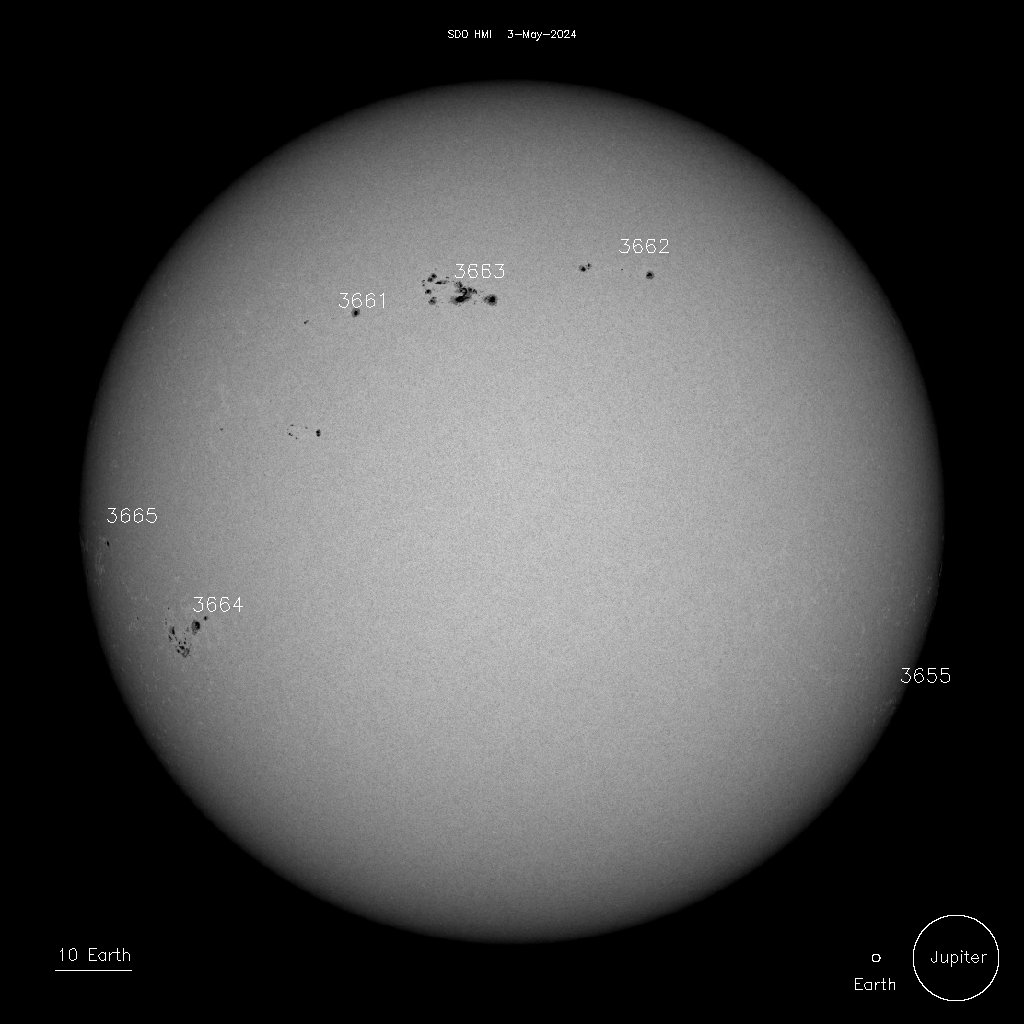
And view current sunspots here (none currently):
NASA: Sunspots.
Theory details:
Space and Science Research Center: The RC Theory.
I haven't read these two books yet, but I plan to:
Amazon: The Chilling Stars. A Cosmic View on Climate Change.
Amazon: Unstoppable Global Warming (Every 1,500 Years).
[Disclosure: If you buy the books via those links, I get a commission from Amazon. Just so you know..]
Subscribe to:
Posts (Atom)